New Energy Sand Table Models & Custom Renewable Energy Solutions | Scale Model Production
Explore our range of new energy sand table models and custom renewable energy models. We specialize in producing high-fidelity scale model representations for the clean energy sector.
1. Understanding New Energy Sand Table Model Production
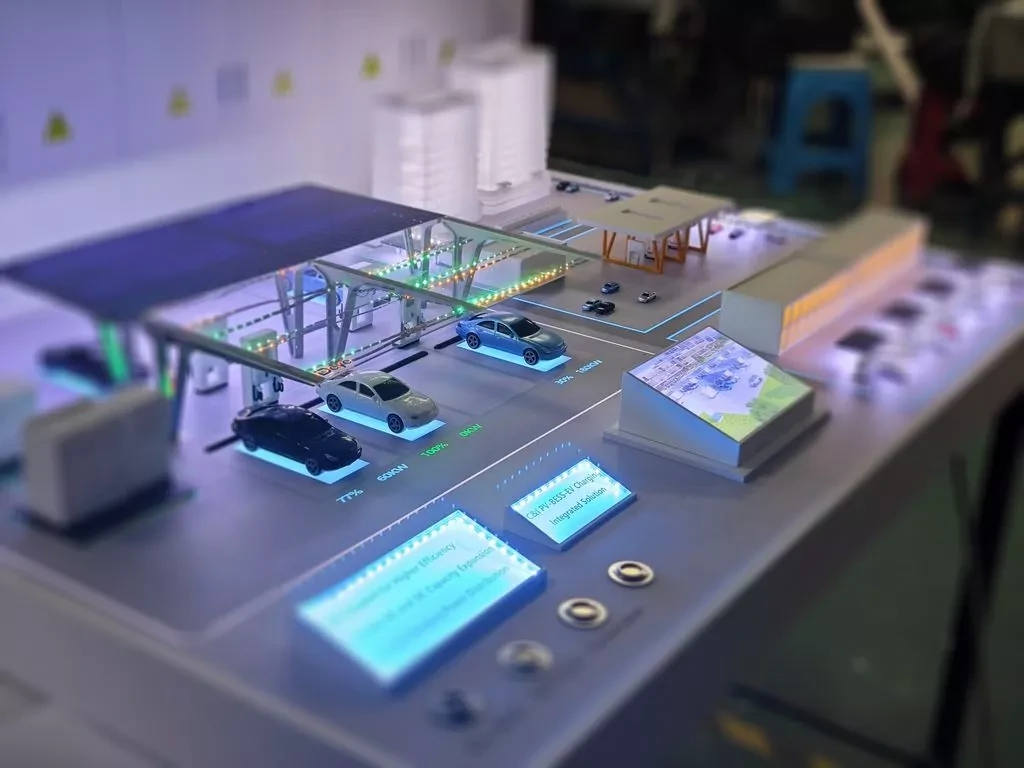
Our new energy sand table model production process involves creating detailed, three-dimensional scale models that dynamically replicate the entire lifecycle of energy production, transmission, storage, and application. These models are meticulously crafted based on real-world systems like photovoltaic (PV), wind power, energy storage, hydrogen energy, and smart grid technologies, maintaining accurate proportions. The models integrate sophisticated features such as mechanical simulation, electronic linkage, and lighting simulation.
The core strength of our sand table model lies in its unique blend of “technology restoration degree” and “dynamic visualization”. Unlike traditional static displays, these interactive 3D printing model outputs focus on demonstrating the principles of new energy conversion, the logic of multi-system collaboration, and the intricacies of intelligent scheduling mechanisms through engaging, demonstrative design. They serve as the essential industrial model for science popularization, project reporting, teaching and training, and technology promotion within the renewable energy industry.
Application Scope
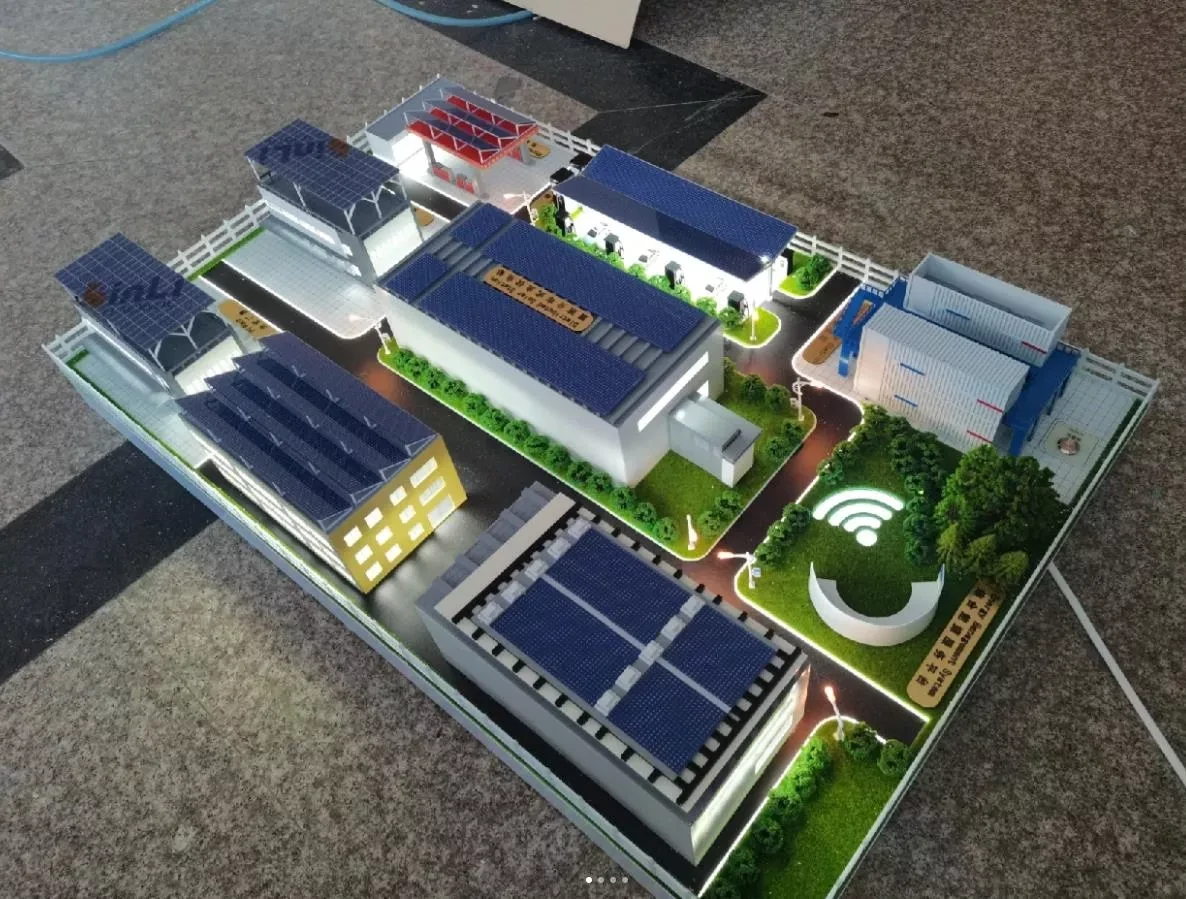
- Production Objects: We cover a wide array, from single installations like centralized PV power stations or distributed wind power projects, to comprehensive systems such as integrated PV-storage-charging stations, hydrogen energy industry chains, and smart grid hubs.
- Application Scenarios: Our scale models are widely utilized in new energy company exhibition halls, industry expos for promotion, practical training setups in energy-focused vocational colleges, new energy project approval reporting, and public science popularization venues.
- Production Attributes: Our sand table model creation combines technical rigor with interactive experience and visual appeal. We fuse new energy technology principles, mechanical structure design, electronic circuit construction, intelligent control programming, and display aesthetics. This integration makes our industrial model a vital bridge, connecting abstract renewable energy technology with concrete display scenarios.
2. Frequently Asked Questions (FAQ)
Question 1: How does your new energy sand table model achieve intuitive restoration and dynamic demonstration of complex multi-energy system collaboration while avoiding technical logic errors?
Answer: Our approach centers on the principle of “accurate technical restoration, simplified presentation effect”. We employ dual-dimensional control, balancing technical precision with user-friendly demonstration.
- Technical Restoration: We strictly adhere to the core principles of the underlying new energy systems. This ensures the layout of PV modules, wind turbine positioning, energy storage charging/discharging timing, and grid connection logic accurately reflect real-world projects or client specifications. Key technical parameters (e.g., PV module wattage, wind turbine RPM, energy storage capacity) are scaled proportionally.
- Complex Collaboration: For intricate multi-energy scenarios, we often involve new energy engineers in the scheme review to rigorously eliminate potential core logic errors, such as improper system interconnections or flawed energy flow dynamics.
- Intuitive Optimization: We simplify the presentation through layered design:
- Omit non-essential auxiliary facilities.
- Focus on the core “energy production, transmission, storage, application” workflow.
- Use distinct colored lighting (e.g., green for transmission, blue for storage, yellow for PV generation) combined with slow-motion mechanical actions (e.g., wind turbine rotation, PV panel tracking) to visualize energy flow.
- Incorporate simple touch interfaces or control panels to allow users to trigger scenarios, helping them grasp complex logic quickly.
- The key is ensuring dynamic design supports technical understanding, catering to both professional scrutiny and general comprehension.
Question 2: How do you select components for the dynamic drive system and electrical circuitry in your new energy sand table models to ensure long-term durability and safety during demonstrations?
Answer: We implement a “scenario-adapted selection + comprehensive safety design” strategy to guarantee stability, safety, and longevity.
- Drive System Selection: Components are chosen based on new energy equipment characteristics:
- Motors for rotating/adjusting parts (fans, PV tracking) use low-noise, high-torque micro DC reduction gear motors.
- Speeds are controlled to a safe, demonstrative range (e.g., 3-8 RPM) suitable for scale model interpretation, often using reduction gear sets to match true proportion and ensure smooth operation.
- Circuit & Energy Flow: Low-power LED light strips combined with dimming modules effectively simulate energy transmission intensity and flow, suitable for a 3D printing model display.
- Safety & Stability Measures:
- Circuit Design: Utilize low-voltage DC power supplies (typically 5-12V). Employ flame-retardant wiring, install independent switches, fuses, and leakage protection for core circuits. Insulate critical nodes to prevent short circuits.
- Control Module: Employ robust controllers like programmable logic controllers (PLCs) or microcontrollers. These support automatic loop demonstrations and manual triggering, with fault self-diagnosis capabilities to prevent single-point failures from halting the entire system.
- Structural Protection: Transmission components are enclosed in transparent protective covers. Circuit modules are securely fixed to the sand table substrate, often with dedicated heat dissipation channels. Wearable or replaceable components (like simulated blades or PV panels) are designed for easy replacement and maintenance, ensuring long-term operational readiness and extending the service life of our industrial model.
3. Benefits of Creating a New Energy Sand Table Model
Investing in a custom new energy sand table model offers significant advantages:
-
Concrete Abstraction: Bridging the Gap: New energy systems often involve complex, multi-link collaborations and intricate technical principles. Our scale model transforms these abstract energy concepts and system scheduling logics into tangible, visual scenes through dynamic demonstrations. This allows for rapid communication of core information in settings like public science centers, client meetings, or classroom training, significantly reducing cognitive barriers and reliance on dense technical documentation.
-
Enhanced Project Display & Competitive Edge: Compared to traditional 2D drawings or simple physical mockups, dynamic sand table models provide superior visual impact and interactive experience in new energy project reporting and industry exhibitions. They allow intuitive showcasing of project design highlights, technological innovations, and operational efficiencies. For instance, demonstrating the full cycle of a PV-storage project (generation, storage discharge, grid injection) via the model can effectively gain approval from stakeholders and partner buy-in, directly improving project implementation success and cooperation conversion rates.
-
Risk Mitigation & Design Optimization: Before physical implementation, our industrial model allows simulation and testing of various operational scenarios (e.g., grid interaction under fluctuating loads, system response to extreme weather conditions). This proactive approach helps visually identify potential issues like system layout conflicts, equipment compatibility problems, or energy flow bottlenecks. Early detection facilitates design optimization, particularly crucial for complex projects like smart grids or integrated energy hubs, thereby reducing risks associated with later construction modifications, trial production issues, and lowering the overall project cost.
-
Multi-Scenario Reusability & Cost-Effectiveness: Our models are designed using modular and standardized principles. This allows flexible adjustment of dynamic functions and easy updating of equipment representations to meet different display needs (e.g., adding hydrogen electrolyzer modules, upgrading scheduling algorithms). Suitable for fixed installations, mobile expo displays, and diverse training environments, these scale models offer exceptional adaptability. Their modular nature means minimal need for complete redesign; simple module replacement and software updates can adapt them to new technologies or scenarios, extending their service life and controlling long-term production and maintenance expenses effectively.