Custom Miniature Airplane Models: Precision Aviation Art Scale Models
At the intersection of aviation culture and meticulous craftsmanship, the custom miniature airplane model factory transforms humanity’s fascination with flight into tangible reality. This specialized craft organization goes beyond typical toy manufacturing, integrating aviation engineering knowledge, high-precision manufacturing technology, and artistic design. Its core product, the aviation scale model, meticulously reproduces the aerodynamic shape, structural details, and paint markings of real aircraft, often at scales ranging from 1:50 to 1:500. These detailed scale models cover diverse fields, including civil airliners, military fighter jets, historical classics, and conceptual aircraft.
Creating a scale model requires extraordinary precision. From the sweep angle of the wings to the shock absorber struts of the landing gear, and from the curvature of the cockpit portholes to the arrangement of the engine blades, every detail is meticulously modeled and processed according to technical drawings and actual aircraft photos. This commitment ensures the aviation scale model isn’t just a static ornament; it’s a miniature textbook of aviation technology. Some manufacturers also specialize in industrial model creation, utilizing advanced techniques like sand table model design or 3D printing model capabilities for complex components.
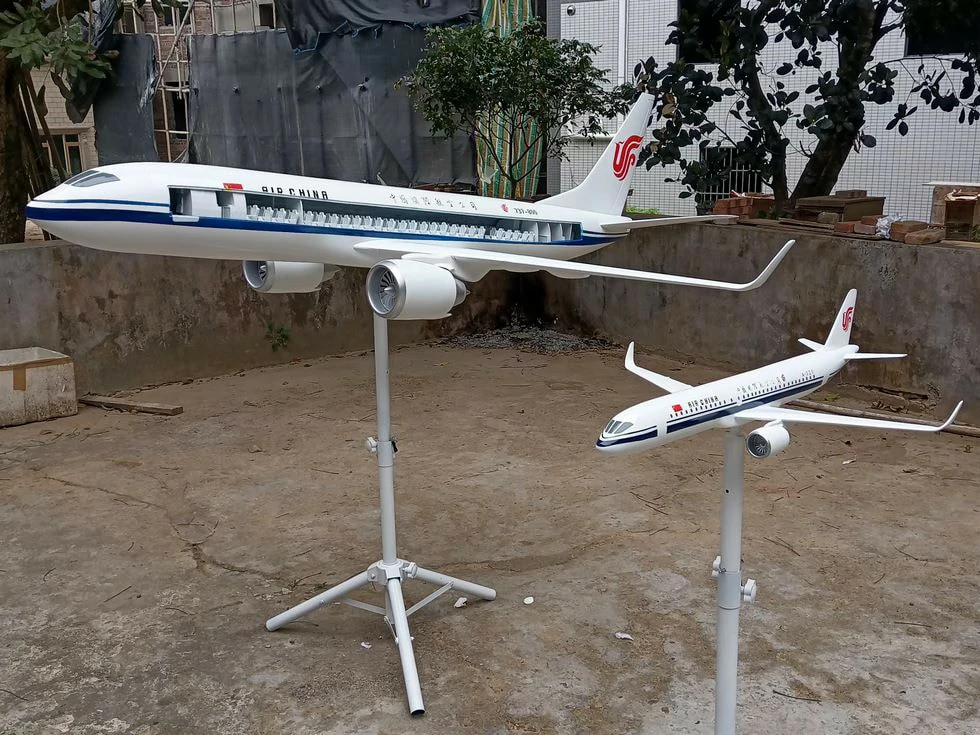
The market for custom miniature airplane models is broad. Scale model factories serve various clients, including aviation museums, flight academies, airport VIP lounges, and individual aviation enthusiasts, retired pilots, and corporate executives. They fulfill needs for educational displays, science popularization, space decoration, collecting, commemoration, business gifts, and even emotional connection. High-end facilities can offer bespoke features, such as custom flight number painting, detailed cabin interior layouts, and simulated service wear, giving each scale model a unique identity.
Custom Aviation Scale Models: Frequently Asked Questions
What is the essential difference between a miniature airplane model and a regular toy airplane?
The core difference lies in “precision” and “professionalism”. While ordinary toy airplanes focus on entertainment, often with simplified designs and injection-molded plastic parts, custom miniature airplane models adhere to the principle of “realistic reproduction”. They meticulously replicate the aerodynamic shape and structural data of real aircraft. For example, a 1:100 scale Boeing 747 requires wingspan, fuselage length, and vertical tail height to be precisely proportional. Hidden details like wing rib structures and engine inlet designs must also be accurately represented. Materials often include high-precision aviation aluminum, carbon fiber, and resin, processed through sophisticated methods like CNC machining or 3D printing model techniques. Many scale models feature movable parts like landing gear, cabin doors, and even functional lighting systems. Their value aligns more with collectibles or industrial model art than typical toys.
Why is the production cycle of customized miniature models generally longer, and can it be expedited?
The production cycle for a custom miniature airplane model depends on complexity and process requirements. A high-precision scale model typically involves numerous steps, including data collection (blueprints, photos, paint schemes), 3D modeling, mold development (or direct 3D printing model), manual assembly, surface treatment (polishing, painting), detail work (stenciling, riveting), and quality inspection. Manual assembly and surface treatment demand exceptional craftsmanship – consider the required 0.1mm gap accuracy between wings and fuselage, or the multi-layer spraying needed to replicate metallic textures. The standard production cycle usually ranges from 4 to 8 weeks; complex projects often take longer. Some factories offer 3D printing model or expedited services, but this often incurs extra costs and may compromise detail quality due to rushed processes. It’s best to allow sufficient time to ensure the finished scale model meets expectations.
The Value and Significance of Custom Aviation Scale Models
Custom miniature airplane model factories fulfill a unique niche, offering more than just aviation-themed novelties. They demonstrate significant value at multiple levels.
For aviation scale model enthusiasts and institutions, these models serve as “miniature carriers” of aviation history. Reproducing classic aircraft like the WWII P-51 Mustang, the jet age pioneer de Havilland Vampire, or modern marvels like the C919, helps the public intuitively grasp the evolution of aviation technology and inspires interest in aerospace.
For corporate model clients, bespoke scale models with company logos or specific route markings make powerful, high-end business gifts. They symbolize enterprise and achievement, offering a unique industrial model beyond standard merchandise, with immense commemorative value.
Individual collectors cherish models bearing personal significance – perhaps a replica of an aircraft they flew or one associated with their retired pilot career. These detailed scale models become more than decorations; they are emotional connections linking personal stories to aviation dreams.
Furthermore, the development of these scale model factories drives technological progress in precision machining, 3D printing model, and materials science. The accumulated expertise benefits related fields, such as wind tunnel testing or industrial model verification for aviation prototypes, creating a positive cycle of “art and technology”.