Agricultural Sand Table Models: Blueprint to Custom Scale Model Production
Custom Agricultural Sand Table Models: A Journey from Blueprint to 3D Scale Models
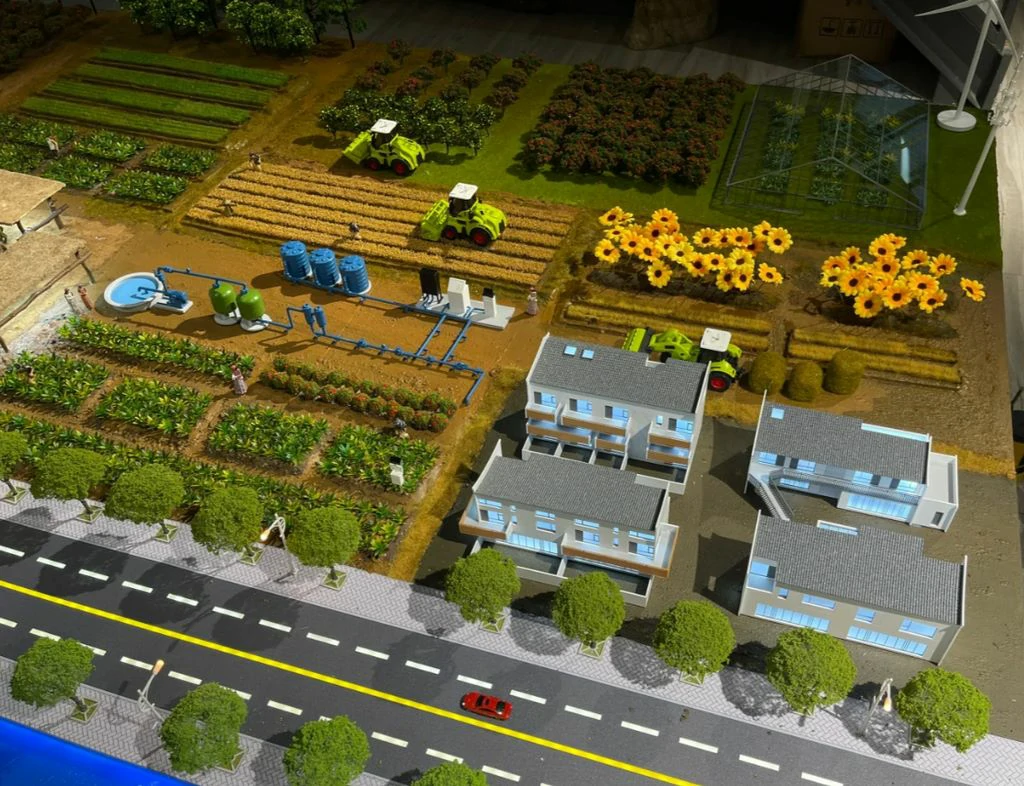
This case study explores the production of sand table models, a specialized type of scale model used for detailed agricultural planning and rural development visualization. We walk through the creation process, from initial concept to the final three-dimensional countryside restoration model.
Preliminary Preparation: Planning Drawings and Material Selection for Agricultural Models
Before starting custom scale model production, it’s essential to replicate the planning drawings of the agricultural park accurately. This ensures a clear layout of all elements including:
- Farmland areas
- Greenhouse structures
- Buildings and facilities
- Road networks
- Irrigation systems
Material Selection for Different Model Components:
- Base Plate: Typically made from density board or hard foam board, approximately 1-2cm thick. This provides a stable foundation for assembling the complete model terrain.
- Ground/terrain:
- Farmland: Light brown clay (simulating soil texture)
- Roads: Gray PVC board (simulating asphalt texture)
- Water Systems: Transparent resin (simulating water surfaces)
- Buildings:
- Structures (houses): Foam board for walls and cardboard for roofs
- Greenhouses: Transparent acrylic panels + wire frames
- Vegetation:
- Farmland Crops: Green clay or soft clay molded into shapes
- Trees: Combination of resin trunks and foam ball crowns
- Flowers: Colored clay molded into flower shapes
- Facilities:
- Agricultural Machinery: Resin models
- Irrigation Equipment: PVC pipes and small water tanks
- Street Lighting: Metal wires and LED lights
Production Process: From Base Plate to Detailed 3D Model
The creation of sand table models involves careful construction and terrain shaping:
-
Base Plate Assembly and Terrain Shaping
- Accurately cut and splice the base plate according to the blueprint scale
- Shape farmland terrain using layered clay and foam balls
- Smooth road surfaces by polishing PVC boards with sandpaper
- Create water systems by applying base coat and simulating water flow with blue resin
-
Building and Facility Assembly
- Construct houses using foam board walls and cardboard roofs
- Add realistic details with blue cardboard windows and dark gray roofs
- Polish building edges carefully to enhance the overall appearance
- Create greenhouses using transparent acrylic panels and wire frames
- Add simulated crops inside using green clay
- Incorporate metallic elements like copper wires for added realism
-
Vegetation and Detail Implementation
- Plant farmland crops according to the blueprint layout
- Sculpt trees with resin trunks and foam ball crowns
- Add colored clay flowers at appropriate locations
- Include miniature figures representing farm activities
- Place vehicles and equipment according to the plan
Post-Production Finishing: Achieving Realism in Agricultural Models
The finishing touches transform the model into a realistic representation:
-
Coloring and Detail Enhancement
- Apply base colors to different terrain elements (light brown for farmland, gray for roads)
- Add detailed color treatments to buildings and structures
- Enhance vegetation colors for greater realism
- Polish surfaces to improve texture and appearance
-
Lighting and Atmosphere Creation
- Install miniature LED lights for realistic illumination effects
- Add reflective elements to enhance the model’s visual appeal
- Create atmospheric effects like simulated weeds and water ripples
- Add subtle weathering effects for added authenticity
Achieving 90% Restoration Accuracy in Scale Models
The key to creating highly accurate industrial models lies in attention to detail:
- Strict adherence to blueprint scale dimensions
- Realistic vegetation placement based on actual agricultural practices
- Precise location of facilities and infrastructure
- Careful implementation of lighting and atmospheric effects
- Continuous reference to actual agricultural park photos for authenticity
This meticulous approach ensures that the final sand table model achieves an impressive level of realism, effectively serving as a valuable tool for agricultural planning, presentation, and education.