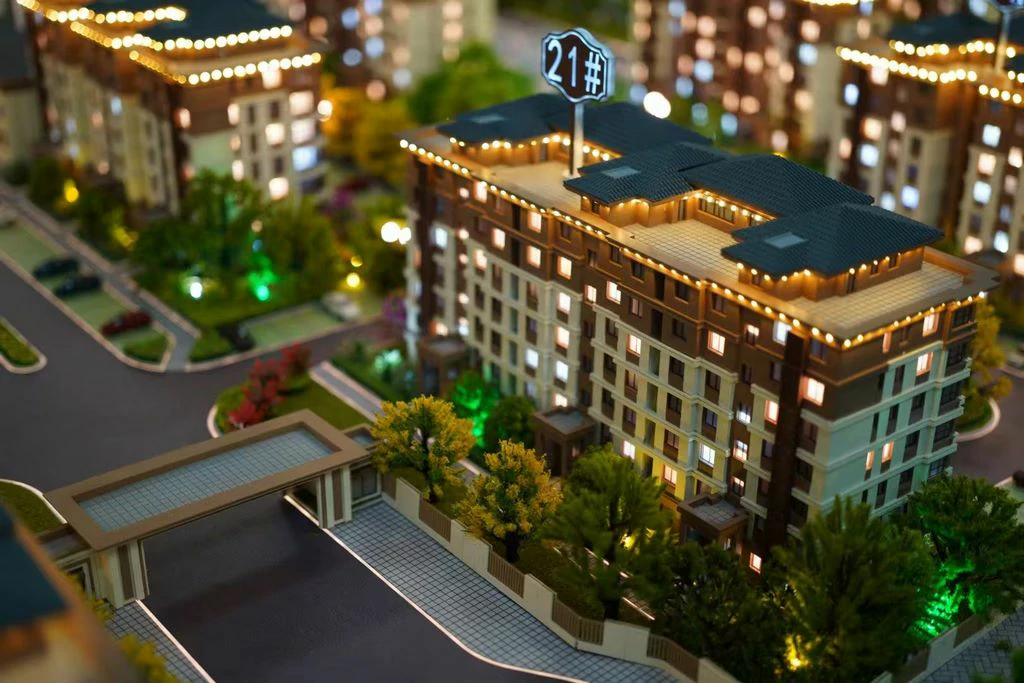
Residential Community Scale Model | Exhibition Sand Table Display
Within the realm of architectural design and presentation, sand table models stand out as highly intuitive and effective tools. They provide a three-dimensional, vivid representation capable of clearly conveying complex design concepts and planning layouts to diverse audiences. This case study details the production of a detailed scale model – specifically a sand table model – for a residential community.
Project Overview
The objective of this project was to create a comprehensive scale model of a residential community. This sand table model was designed to showcase the intricate details of the community’s overall planning, architectural layout, landscape design, and infrastructure. The client required a model with a high degree of accuracy, ensuring that every element was faithfully represented to provide a true-to-life visualization.
Materials Selection
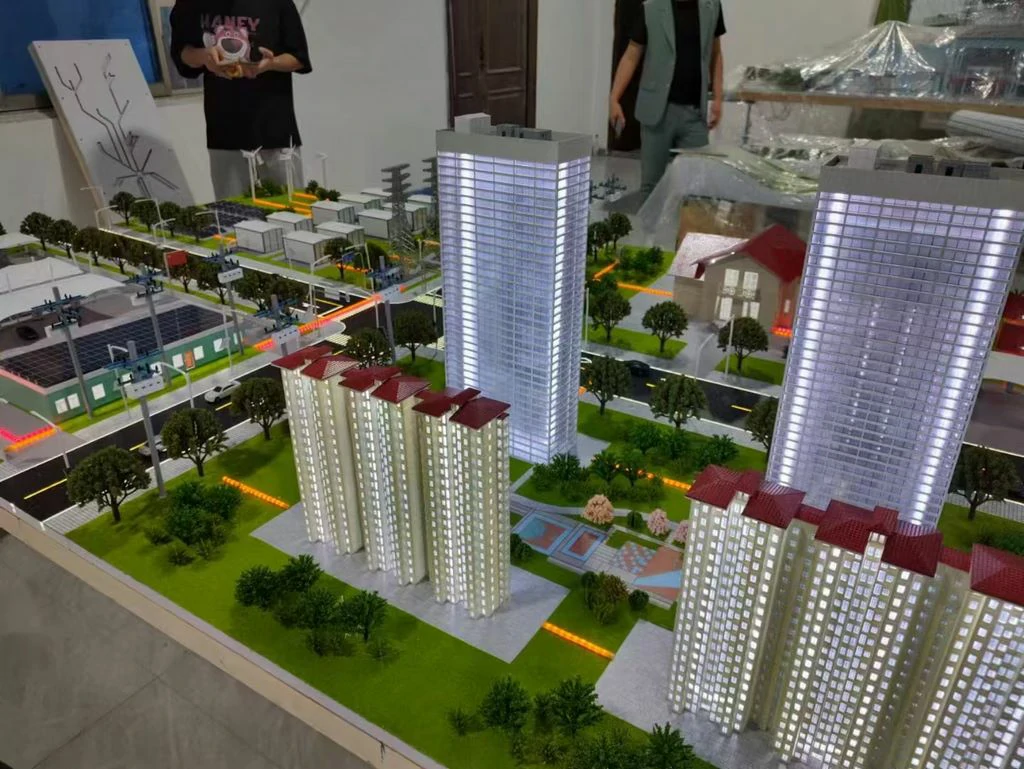
To achieve the desired level of detail and realism, careful consideration was given to material selection. ABS board was strategically chosen for the main building components due to its excellent properties: it is easy to cut and shape, possesses sufficient strength, and offers good stability. For simulating the community’s green spaces, different colored velvet fabrics were employed, complemented by miniature plastic flowers and plants to create a rich and varied landscape effect. Textured cardboard was selected for roads and squares, providing a tactile quality that enhances the model’s realism. Additionally, miniature LED lighting was incorporated for enhanced visual appeal, particularly during evening displays.
Production Process
The production process began with a thorough analysis of the community’s design drawings, including site plans, elevation details, and landscape specifications, serving as the blueprint for construction.
- Building Construction: The core structure was meticulously crafted by cutting ABS board shapes according to the architectural plans and assembling them to form the building outlines. Crucial details such as windows, balconies, and architectural features were then enhanced using miniature plastic parts, adding significant realism.
- Color Accuracy: To ensure visual fidelity, building colors were carefully matched. Reference was made to actual architectural renderings, and similar colors were expertly blended and applied for spraying, guaranteeing accuracy.
- Landscape Development: Green spaces were arranged according to the landscape design plan. Velvet cloth in various shades was laid down to simulate grassland, and this was further enriched with plastic plants and flowers of differing colors and sizes. Scattered miniature trees added vertical interest and depth to the green areas.
- Roads and Squares: Road surfaces were laid using textured cardboard, accurately reflecting the intended road types and textures. Square areas were enlivened with miniature sculptures, benches, and other leisure facilities, creating focal points and adding vibrancy.
- Lighting Integration: Miniature LED lights were strategically installed within buildings and public spaces. This feature significantly enhances the model’s presentation, simulating the ambiance of a well-lit community, especially relevant for night-time exhibitions.
- Scene Arrangement: To bring the community to life, small-scale vehicles and miniature figures representing residents or visitors were placed throughout the model, creating a sense of activity and scale.
Final Outcome
The resulting scale model, presented as a detailed sand table model, achieved an exceptionally high level of restoration. Every aspect, from the intricate building details to the carefully simulated landscape and infrastructure, was meticulously handled.
This sand table model serves as an invaluable tool. It allows the audience to intuitively grasp the overall planning and design philosophy of the residential community, offering an immersive experience that feels almost like being physically present. Beyond its immediate use in project presentations and marketing, this highly detailed scale model provides crucial reference material for the construction and development phases, ensuring the real-world execution aligns closely with the detailed vision captured in the model. It effectively showcases the potential of scale models and sand table models in architectural communication.