Container Ship Scale Model Production Case Study
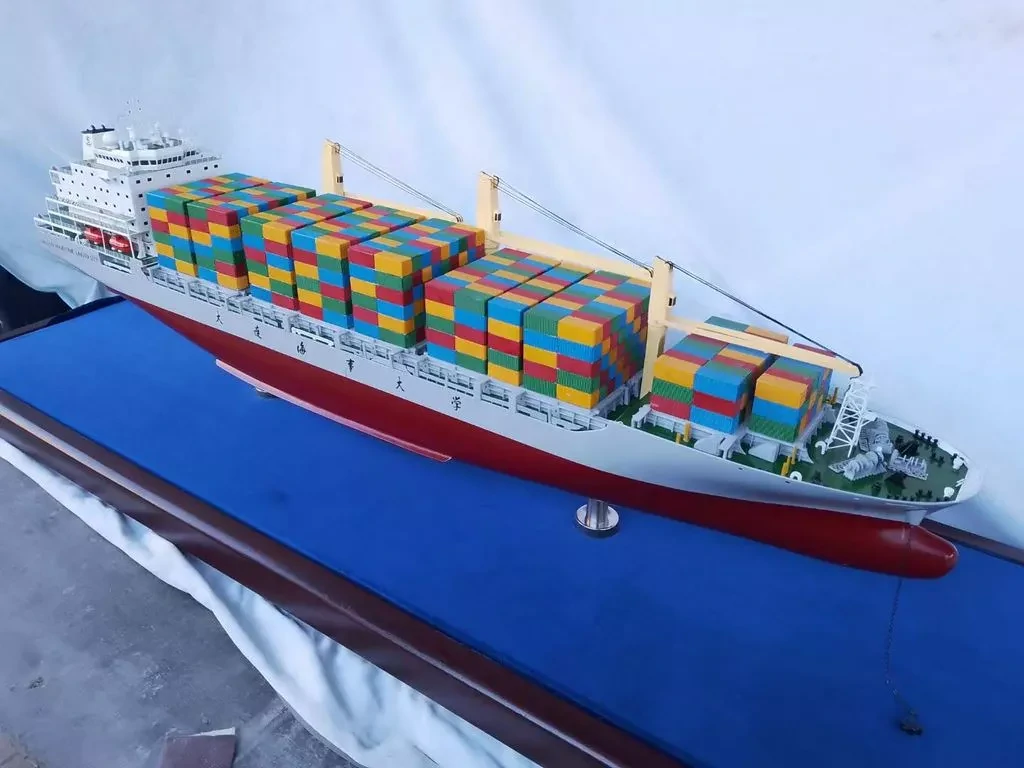
This case study details the production of a 1:100 scale model of a modern container ship, designed for display and collection, with a total model length of approximately 60cm (based on a 600m prototype). Primarily intended for teaching demonstrations at Dalian Maritime University, this miniature scale model meticulously reproduces the exterior appearance of a large container ship, including its red and white hull, colored stacked containers, and deck equipment like cranes.
Project Overview: Creating a Detailed Scale Model
This project involved the creation of a static scale model display piece for a container ship. The goal was to produce a highly accurate scale model at a 1:100 ratio, with a total model length of about 60cm. This miniature scale model was specifically designed for teaching demonstrations within maritime academic institutions, such as Dalian Maritime University. The focus was on capturing the essential features of a modern large container ship, including its distinctive red and white hull coloring, the realistic representation of fully loaded, multi-colored containers, and the accurate depiction of cranes and other outfitting equipment on the deck.
Material Preparation for the Scale Model Production
Based on standard model production techniques and material selection guidelines, the following materials were chosen for constructing this scale model:
- Hull and Deck: 3mm thick ABS plastic sheet (for cutting hull and deck outlines), 2mm thick Styrofoam sheets (for internal structural supports).
- Containers and Superstructure: 0.5mm thick ABS plastic board (for forming thin-walled containers), 3D printed components (for complex superstructure and crane details).
- Outfitting Parts and Railings: Metal etching sheets (for intricate details like railings and gangways).
- Tools: Model knives, steel rulers, Polyester resin (AB soil equivalent for filling gaps), sandpaper (800-1500 grit), tweezers (for handling small parts).
- Painting Supplies: Water-based paint (colors: red, white, yellow, blue, green), spray pens (for efficient large-area painting), masking tape (for masking during color application).
Scale Model Production Steps: Building the 1:100 Container Ship
The creation of this scale model involved several detailed steps:
-
Design and Layout (Scale Model Production Foundation):
- Drawing Preparation: Referenced actual container ship blueprints to establish the precise waterline length, overall beam (width), and draft (depth) for the scale model.
- Proportional Scaling: Converted all prototype dimensions into the appropriate sizes for the 1:100 scale model.
- Sample Production: Constructed cardboard templates to verify the symmetry of the ship’s sides, ensuring the final scale model would be aesthetically pleasing and balanced.
-
Ship Hull Construction (Foundation of the Scale Model):
- Cutting and Forming: Carefully cut the ABS sheets and Styrofoam sheets according to the finalized design drawings. Used heat (hot air gun or hot water) to soften and bend the ABS sheets into the required curved shapes for the hull sides. Assembled these panels to form the smooth hull line of the scale model.
- Assembly and Filling: Bonded the hull panels together and attached the bottom deck plate. Filled all internal gaps and panel joints with Polyester resin, allowed it to cure, and then meticulously sanded the surface smooth to achieve a seamless finish characteristic of high-quality scale models.
- Internal Structure: Bonded Styrofoam sheets inside the hull to create a strong keel and rib support structure, reinforcing the hull and preventing any warping or deformation in the finished scale model.
-
Deck and Superstructure Construction (Building the 3D Printed Model Elements):
- Deck Laying: Applied a layer of 3mm ABS sheet to the inside of the hull frame to form the deck surface. Ensured appropriate gaps were left around hatch openings. Filled the edges of these gaps with thin strips of ABS or light wood, then sanded and polished them flush for a clean appearance.
- Superstructure Production: Employed both 3D printing and ABS board cutting to fabricate the superstructure elements, such as the bridge (driver’s cab) and accommodation areas. Ensured the proportions and placement of these structures on the deck matched the original ship design.
-
Container Production (Mass Producing Model Components):
- Efficient Container Fabrication: Given the high number of containers required, production utilized efficient methods like laser cutting ABS sheets or 3D printing standard container shells. Alternatively, prefabricated small building blocks could be used for scalability in scale model production.
- Container Stacking and Coloring: Containers were painted in a repeating pattern of four colors (red, blue, yellow, green) to simulate the visual effect seen in real ports. They were then stacked meticulously on the deck according to standard “bottom horizontal, top vertical” configurations, a common detail in scale model ship production.
-
Outfitting and Detailing (Adding Realism to the 3D Printed Model):
- Crane and Jib: Created the shore crane using either 3D printing or ABS board modeling. Attention was paid to accurately representing the typical tilt of the jib and incorporating simulated steel wire ropes, often using fine wire for the cables.
- Railings and Gangways: Used metal etching sheets for the railings. Simulated railing posts with thin copper or nylon wires, and detailed gangways and cable guides for added realism in the scale model.
- Text and Identification: Added the name “Dalian Maritime University” in white paint to the bow and stern of the ship. A small nameplate was also affixed.
-
Painting and Final Beautification (Enhancing the Model Display):
- Base Coat: Applied a gray or white primer to the hull bottom to simulate the submerged part of the ship. This step also allowed for checking the surface smoothness and correcting any imperfections before final painting.
- Color Separation: Executed the iconic red and white hull coloring. The bottom section was sprayed red, while the top section was painted white, using masking tape to ensure sharp, clean boundaries – a crucial aspect of scale model finishing.
- Container Colors: Each container was individually sprayed with one of the four standard colors (red, blue, yellow, green), allowed to dry, and then carefully stacked for final assembly onto the deck.
- Aging Treatment: Applied a special enamel paint technique to selectively darken and age certain parts of the model (like the hull strakes or superstructure edges), enhancing the overall realism and giving the scale model its final, aged appearance.
Scale Model Achievement Display and Applications
The completed scale model was mounted on a blue velvet base, effectively simulating an ocean environment. This resulted in a visually striking scale model with excellent overall proportions and rich detail. This miniature scale model serves multiple purposes, functioning as a valuable tool for teaching demonstrations related to container shipping and maritime technology, as well as a potential industrial model or sand table model for institutional showcases. It exemplifies the capabilities of modern scale model production techniques, combining traditional craftsmanship with advanced methods like 3D printing model for intricate details.