Crane Ship Model Factory: Expertise in Scale Model & Industrial Model Manufacturing
Discover our specialized approach to creating intricate scale model and industrial model replicas of crane ships, combining precision engineering with advanced manufacturing techniques.
1. Key Points for Deepening Design and Material Preparation
-
Design Optimization Techniques:
- Modular Block Design: Employing a block design methodology to segment the hull into 3-5 manageable modules. This facilitates streamlined, independent processing and simplifies future disassembly for maintenance or modification.
- Structural Reinforcement: Strategically reserving reinforcement structures at critical connection points to ensure the overall structural integrity and durability of the scale model or industrial model.
- Advanced Manufacturing Integration: Utilizing 3D printing model technology to efficiently fabricate complex curved surface components, enhancing detail and reducing manual fabrication time.
-
Material Handling Details:
- Foam Board Preparation: Prior to cutting foam board components, ensuring the material is allowed to ‘stand still’ (age) is crucial to eliminate internal stress and prevent warping.
- Metal Finishing: Following metal component processing, implement a thorough deburring treatment to achieve smooth surfaces and eliminate sharp edges, essential for high-quality scale model production.
- Wood Component Preparation: Coating wood components with a primer beforehand is vital to prevent moisture absorption, minimize deformation risk, and ensure a stable base for subsequent finishing processes.
2. Deep Analysis of Core Processes
-
Hull Closure Key Technologies:
- Stepped Bonding Method: Implementing a meticulous stepped bonding technique for layer-by-layer hull overlay, ensuring seamless integration and structural soundness in industrial model assembly.
- Temporary Alignment Fixation: Using high-quality double-sided tape for temporary alignment fixing during the bonding process guarantees precise positioning and minimizes misalignment errors.
- Critical Joint Sealing: Applying epoxy resin injection at critical joints provides superior sealing performance, preventing potential leaks and ensuring the model’s watertight integrity, especially in scale model detail.
-
Lifting System Production:
- Precision Pulley System: Designing the pulley system with high-precision micro bearings significantly reduces operational friction, ensuring smooth and accurate lifting simulation in crane ship models.
- Reliable Steel Wire Rope Fixing: Employing a robust metal sleeve crimping method for securing steel wire ropes guarantees a strong and durable connection point.
- Adjustable Counterweight System: Engineering the counterweight system to be easily adjustable allows for precise balancing and functional testing of the crane arm mechanism in the scale model.
3. Quality Control Strengthening Measures
- Process Inspection Nodes: Establishing clear and rigorous inspection points throughout the manufacturing process ensures consistent quality.
- Material Incoming Inspection: Implementing basic but critical indicators for material incoming inspection guarantees the quality and suitability of all raw materials used in industrial model production.
- Semi-Finished Product Stage Inspection: Monitoring dimensional tolerances during the semi-finished product inspection phase prevents defects from progressing to the final assembly stage.
-
Finished Product Functional Testing: Conducting thorough load capacity tests on the finished product validates its functional performance, crucial for scale model accuracy and intended use simulation.
-
Common Defect Solutions:
- Hull Water Seepage: Addressing potential water seepage issues by increasing the number of sealing layers during hull closure.
- Crane Arm Shaking: Correcting crane arm shaking by ensuring the concentricity of shaft holes during assembly and machining.
- Paint Peeling: Preventing paint peeling requires strengthening the initial surface treatment process before applying the final coat on scale models.
4. Advanced Production Suggestions
-
Dynamic Function Expansion:
- Integrated Automation: Installing a micro motor allows for the achievement of automatic cable retraction functionality, enhancing the model’s dynamic capabilities.
- Modular Lifting Equipment: Designing the lifting equipment to be replaceable offers flexibility for different scenarios or upgrades in industrial models.
- Integrated Lighting: Incorporating an integrated LED lighting system improves visibility and highlights specific features of the crane ship model.
-
Display Optimization Solutions:
- Protective Display Covers: Creating transparent display covers protects the model from dust and accidental damage, enhancing its longevity and presentation quality.
- Contextual Base Design: Designing a scenario-based base provides contextual information and enhances the overall presentation of the scale model.
- Interactive Instruction: Adding an operation demonstration board with instructional functions aids users in understanding the model’s features and operation.
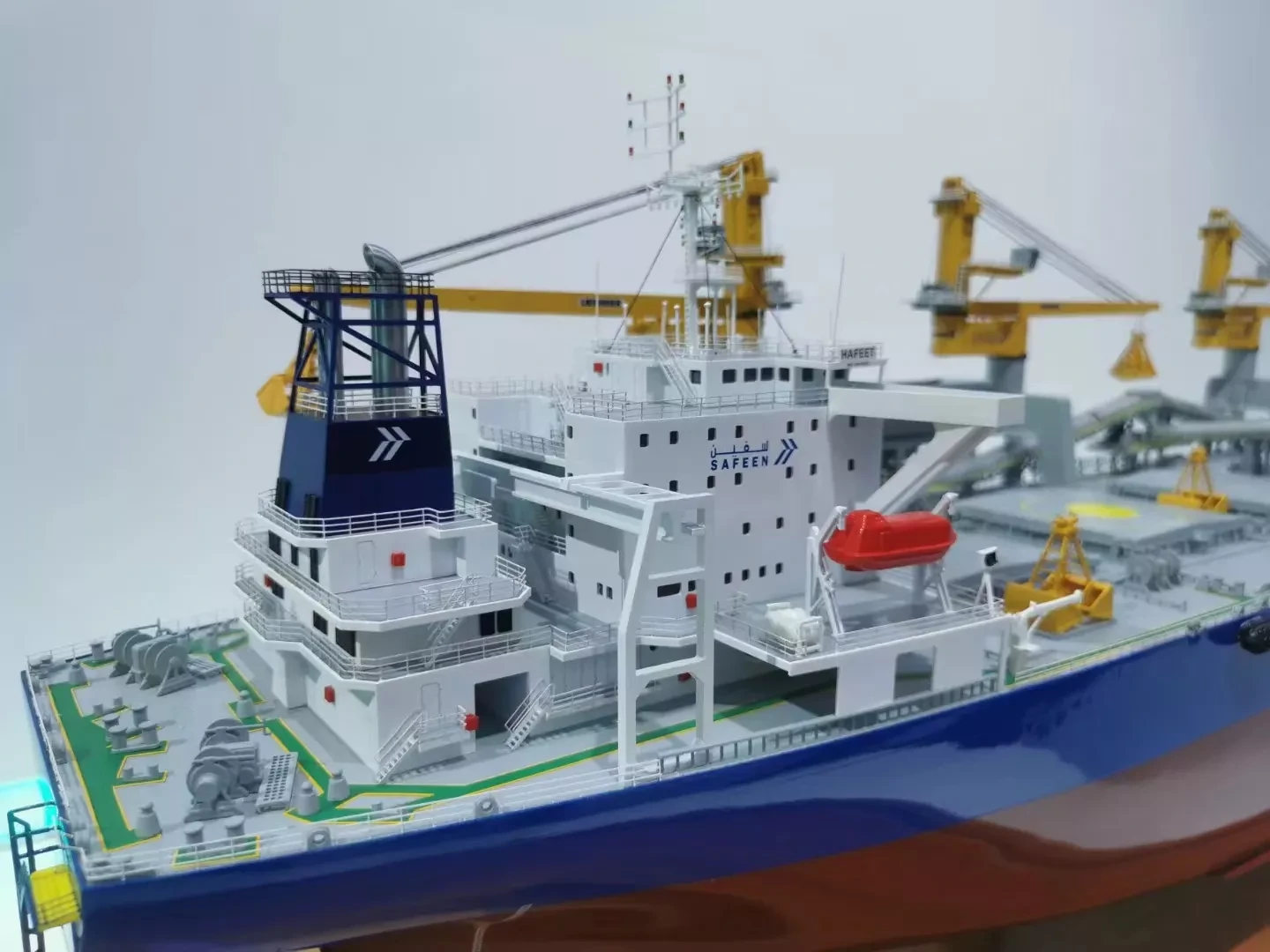
(Image: Crane Ship Model Factory showcasing precision engineering)