## Creating a Detailed 3D Printed Industrial Engine Model
1. Preliminary Preparation: Drawing Analysis and Material Selection for 3D Printing
The first step in producing a high-fidelity scale model involves a thorough disassembly of the 3D drawings provided by the client. This analysis is crucial to accurately interpret the form, proportion, and connection logic of every engine component, including critical elements like the cylinder head, turbocharger, intake pipe, and brackets.
Material selection is equally vital. The choice between photopolymer resin (known for its high printing accuracy and excellent detail reproduction, ideal for intricate parts) and PLA (offering a balance of controlled cost and sufficient structural integrity, suitable for load-bearing elements) should be based on component complexity. For instance, fine textures on the cylinder head might benefit from photopolymer resin, while sturdier structures like parts of the engine block could be better suited to PLA. Careful material matching ensures the final scale model meets both aesthetic and functional requirements.
2. High-Precision 3D Printing for Accurate Component Replication
Once the design is finalized, the components are imported into the 3D printing process. Achieving high accuracy requires meticulous parameter settings, including a fine layer thickness (e.g., 0.05mm) and optimized support structure generation. This ensures that critical features like contours, hole positions, and surface textures are faithfully reproduced, resulting in a highly accurate 3D printing model.
To manage print time and prevent issues like deformation or jamming, a strategic batch printing approach is recommended. Prioritize printing core, complex components (like the cylinder head and turbocharger body) first. Subsequently, print auxiliary parts (intake pipes, brackets) to ensure the highest quality scale model components.
3. Assembly Process: Simulating Real Structural Logic
After printing, the components undergo a cleaning process to remove support structures, handled delicately with tweezers and fine sandpaper to preserve details. The assembly phase follows, meticulously adhering to the original design’s logic. This stage is critical for creating a functional industrial model.
Begin by assembling the core modules (e.g., the cylinder head and engine block, focusing on snap-fit and threaded connections) to ensure precise alignment. Then, integrate peripheral components (turbochargers, intake pipes) using micro-screws or adhesive as needed, simulating the exact assembly logic of a real engine to create an accurate scale model.
4. Post-Processing: Enhancing Realism through Coloring and Texture
Post-processing significantly elevates the realism of the 3D printing model. The process involves several key steps:
- Polishing: Using progressively finer grit sandpaper, carefully polish edges and seams to eliminate visible layer lines, resulting in a smooth, realistic surface finish for the scale model.
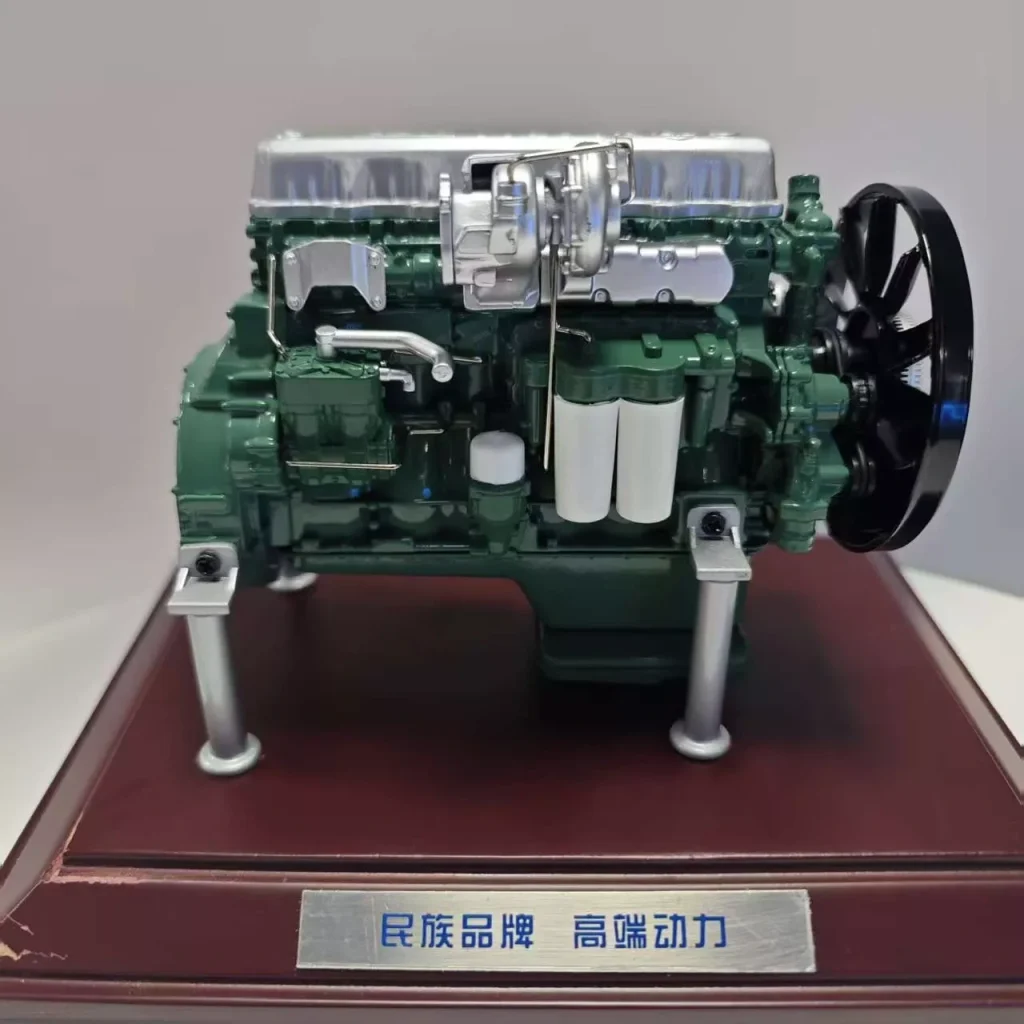
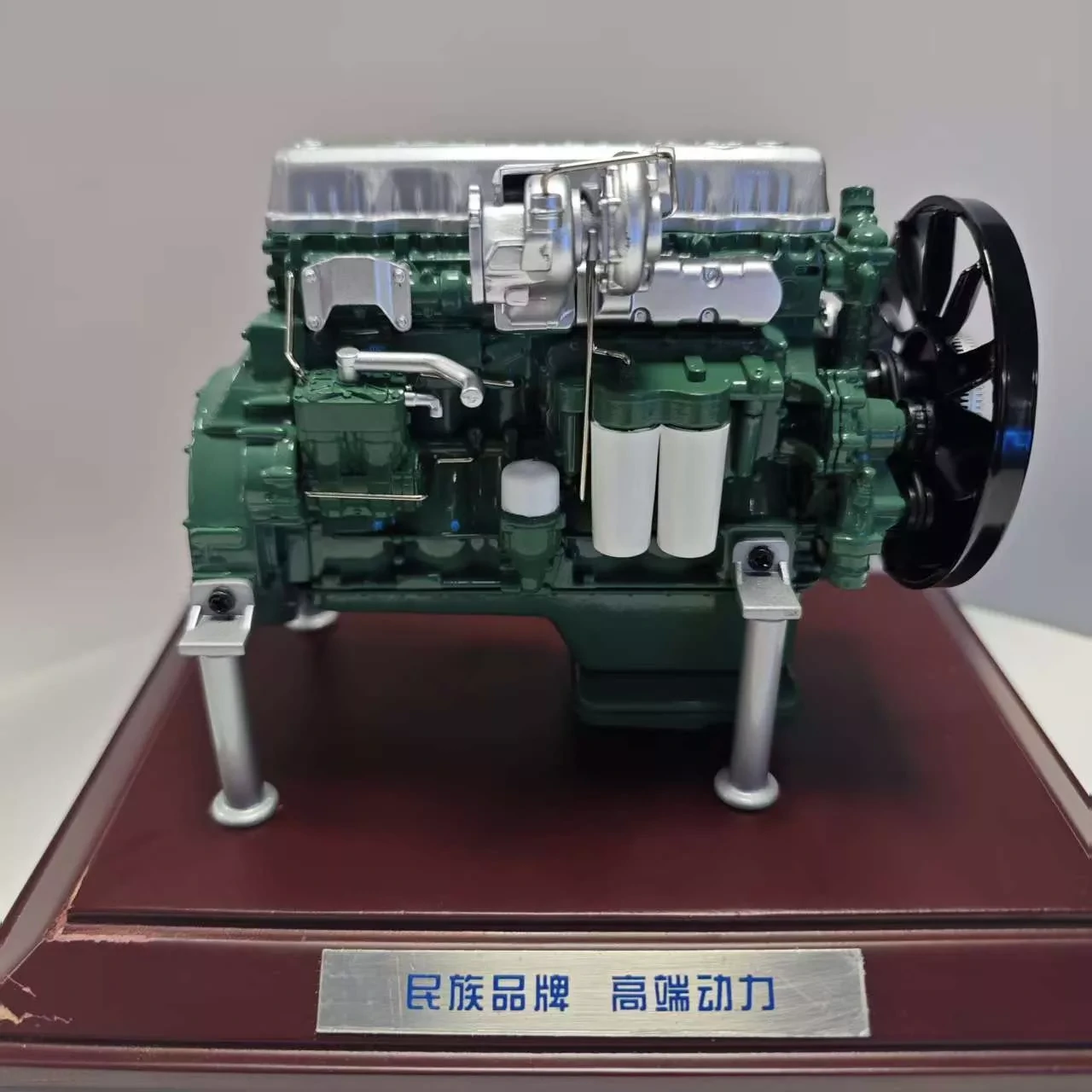
- Color Spraying: Reference the actual engine’s color scheme (e.g., silver-gray body, green intake pipe, polished turbine). Apply color in layers using spray pens or airbrushes, allowing each layer to dry before applying the next, ensuring consistent color and avoiding color differences in the industrial model.
- Detail Depiction: Employ fine brushes to hand-paint details such as heat dissipation holes and bolt textures on surfaces like the cylinder head and turbine wheel, adding crucial industrial texture.
- Final Coating: Apply a clear, transparent protective coating to enhance gloss, provide durability, and unify the color, completing the scale model with a professional, finished appearance.
5. Quality Control: Ensuring 90% Implementation Logic for Industrial Accuracy
The entire process – from structural disassembly and precise 3D printing model creation to logical assembly and detailed finishing – is designed to achieve a high degree of fidelity. The resulting scale model exhibits:
- Accurate Dimensions: Critical features, such as bolt and heat dissipation hole positions on the cylinder head, are reproduced true-to-scale.
- Realistic Aesthetics: Textures (e.g., metallic luster on the turbocharger) and colors (e.g., matte green on the intake pipe) are faithfully recreated.
- Functional Logic: Component assembly clearances and connection methods mirror those found in real industrial designs, creating a highly accurate industrial model.
This comprehensive approach ensures the final product is not just visually impressive but also structurally sound and logically representative of the real engine, making it an effective scale model or sand table model.