optimized for SEO, keeping all your original formatting and requirements:
Simulated Piano Scale Models | Custom Musical Instrument Models
1、 Material selection: Deliver an authentic visual and tactile experience for your piano scale model.
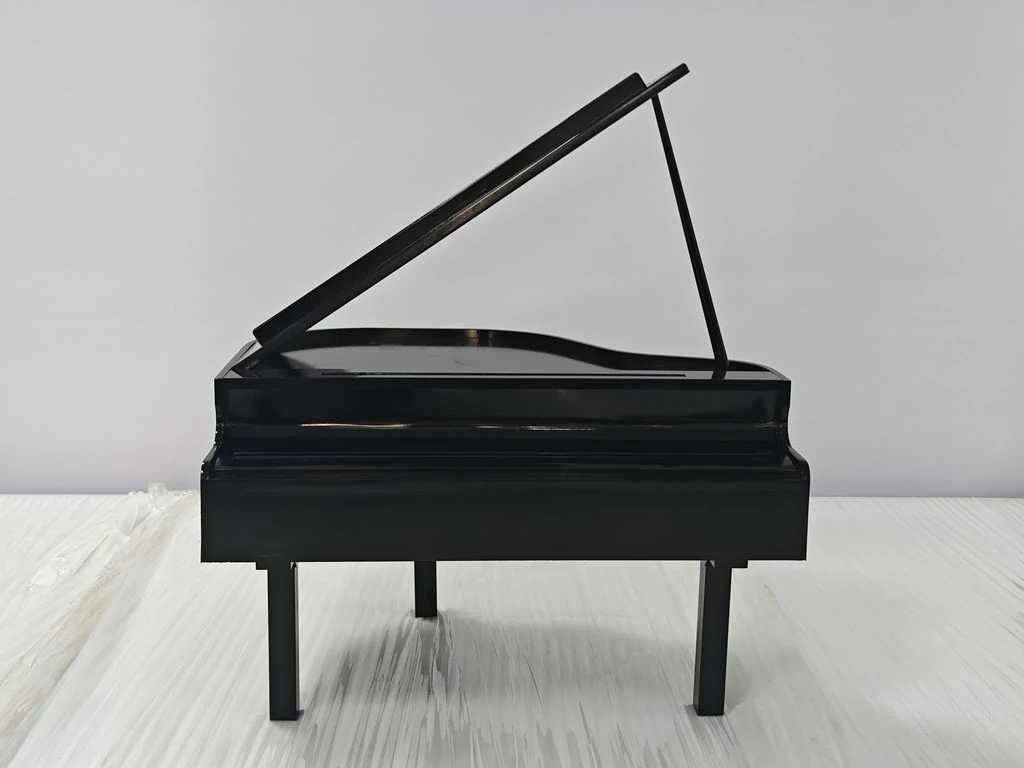
Main frame material
We utilize matte textured resin to print the piano body. This material flawlessly captures the subtle reflective characteristics of a real piano’s paint surface, effectively avoiding the cheap reflective feel often associated with standard PLA plastic.
The individual piano keys are printed using black and white dual color resin. Black keys feature an enhanced texture contrast achieved with a carbon fiber-reinforced dark gray resin.
Detail enhancing materials
Sheet metal components are meticulously crafted from copper-plated PLA material. The desired aged brass effect is simulated through a specialized post-oxidation treatment process.
Strings are meticulously hand-assembled using 0.3mm diameter phosphor bronze wire, ensuring visible tension is maintained even within a compact 20cm scale.
2、 3D Printing Technology: Achieving Precision and Artistic Detail in your 3D printing model.
Split printing strategy
Our approach involves disassembling the model into 12 core components (piano lid, body, keyboard cover, pedal system, etc.), with the smallest printable part being a 1.2mm music stand support foot.
Utilizing a 0.08mm layer height for printing key curved areas ensures a smooth transition and maintains the elegant curve of the piano body in this detailed 3D printing model.
Special structural treatment
The piano keys incorporate a unique movable design. A micro-hinge structure simulates the feel of pressing a full-size key, providing a 3mm stroke for enhanced realism.
The open piano lid features proportional soundboard texture printing inside. This detail is so finely rendered that the wood grain direction remains discernible even when viewed up close at 20cm, making it suitable for a high-fidelity scale model or sand table model.
3、 Post processing: Transforming Mechanical Parts into Artistic Finishes for your industrial model.
Four step method for surface finishing
- Fill layer patterns: Joints are filled with UV resin and cured under UV light. The surface is then polished smooth using 800 grit sandpaper.
- Primer treatment: A base layer of gray primer is applied. A technique involving graphite powder and a cotton pad is used to enhance the appearance of the protruding wood texture.
- Piano paint simulation: Five alternating layers of semi-gloss varnish and black matte paint are applied to replicate the distinctive “deep pool” piano finish.
- Metal parts aging: Cotton swabs dipped in copper green solution are used to selectively apply the effect, creating realistic natural oxidation marks on metal parts like pedal hinges.
Detail enhancement process
- The brand logo is hand-drawn using a 000 marker pen and completed via a meticulous 0.5mm size hot stamping process under a microscope.
- Ivory-like cracks are carefully drawn on the sides of the piano keys using a pencil, mimicking the natural aging patina of antique pianos.
- The internal soundboard features an imitation parchment texture with phonetic symbols that are partially visible through the gaps between the strings, adding depth to your industrial model.