1. Material Selection and Basic Construction
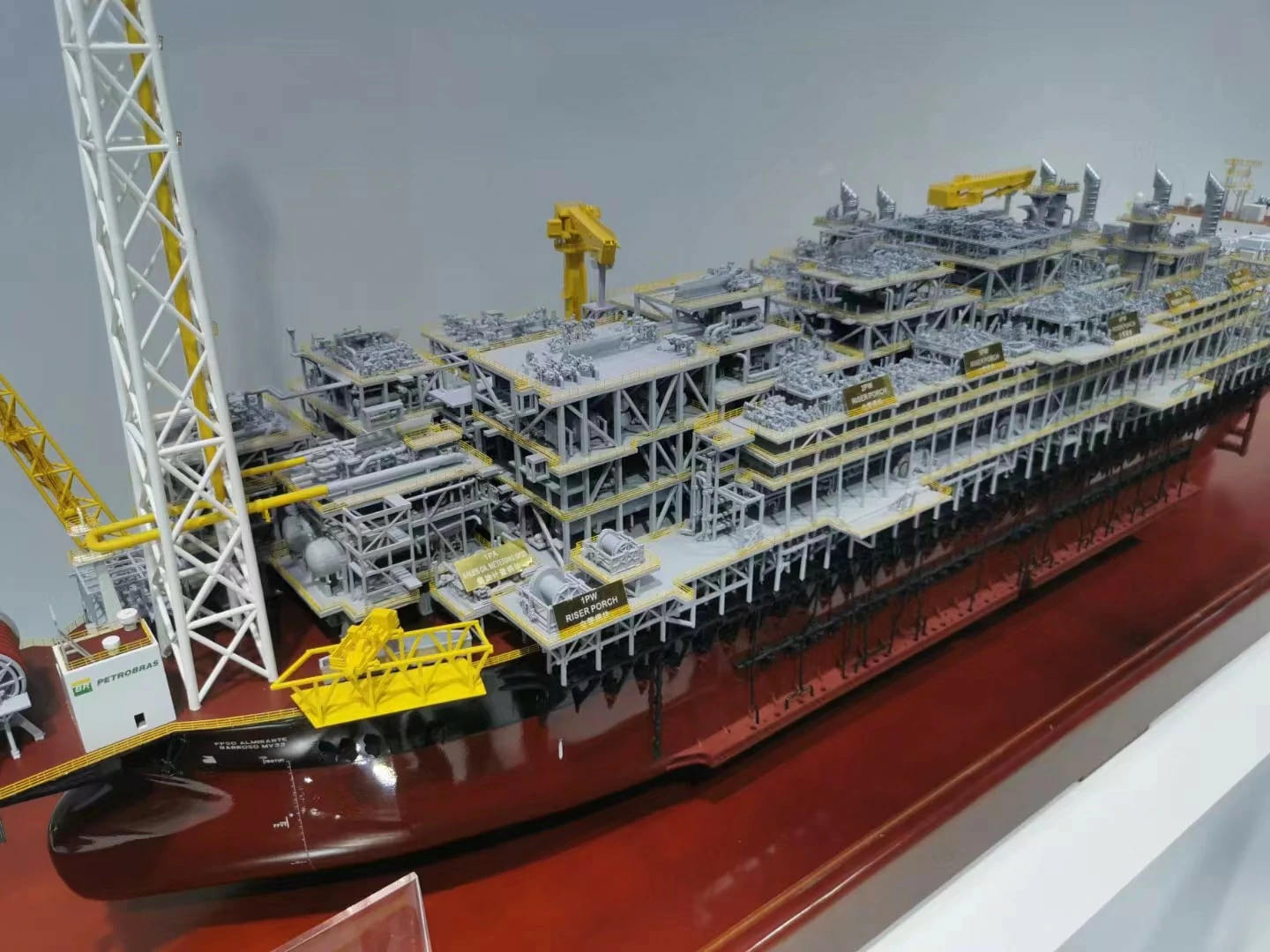
For constructing scale models of ocean research vessels, we utilize ABS sheets at a 1:100 scale as the primary hull material. This material combines toughness with ease of processing. We employ laser cutting technology to restore the outline from design drawings. The hull construction uses the “skinning method” for layered bonding: starting with a 2mm thick plate forming the keel frame, then horizontally wrapping a 0.5mm thin plate to create a streamlined surface. Joints undergo repeated polishing with 800 grit sandpaper and soil filling until completely smooth. The deck is crafted from PVC board with a grapefruit wood grain texture, where anti-slip patterns are manually carved with a carving knife. We carve a parallel groove, 0.5mm deep and spaced every 5mm.
2. Detail Craftsmanship Processing
The superstructure adopts a “modular assembly” process, splitting components like the radar tower and laboratory cabin into 36 independent units for precise construction, often requiring 3D printing model parts for accuracy. Portholes feature 0.3mm transparent acrylic sheets, while window frames are made of copper etched sheets to express a metallic texture. The most challenging boom structure is constructed using brass tubes, carefully heated, bent, and shaped. Joints are fixed with micro pliers, and reinforced with 502 glue mixed with copper powder. The ship’s anchor chain is meticulously disassembled and reassembled from 0.8mm silver chains, with each link manually opened and closed using tweezers to ensure authenticity. These detailed industrial model components meet high standards of precision.
3. Color Art Expression
Painting employs the “three-stage aging method”: first applying a white water-filled soil primer, then spraying GSI ocean gray (H331) and deck orange (H22220) for color separation. The second stage involves applying a mixture of oil paint brown and coal black for filter treatment, adding simulated rust to rivets. Finally, a powder stick creates a salt spray effect by scraping white powder into fine particles, dipping them in a flat-tipped pen, and lightly dusting the ship’s seams. Submerged areas receive special treatment: a red background with anti-fouling paint, followed by a semi-transparent seaweed green stain to simulate biological adhesion, enhancing the realism of the scale model. This attention to detail elevates the model beyond simple representation.
4. Dynamic Effect Enhancement
To enhance realism, a miniature LED light group is installed inside the chimney, connected to the button battery compartment at the bottom of the ship via 0.2mm enameled wire. A smoke effect is achieved by tearing degreased cotton into a flocculent state and impregnating it with gray pigment. A movable propeller at the stern is driven by a 0.3mm bearing and micro motor to simulate cruising at 200 revolutions per minute. Magnetic suction devices installed on the hull allow for replacing research equipment pods in various states, showcasing the model’s functionality as a sand table model.