optimized for SEO, maintaining all original formatting and requirements:
New Energy Scale Models | Custom Renewable Energy Model Factory
Case Study: Creating a High-Fidelity New Energy Scale Model (Restoration Degree: 90%)
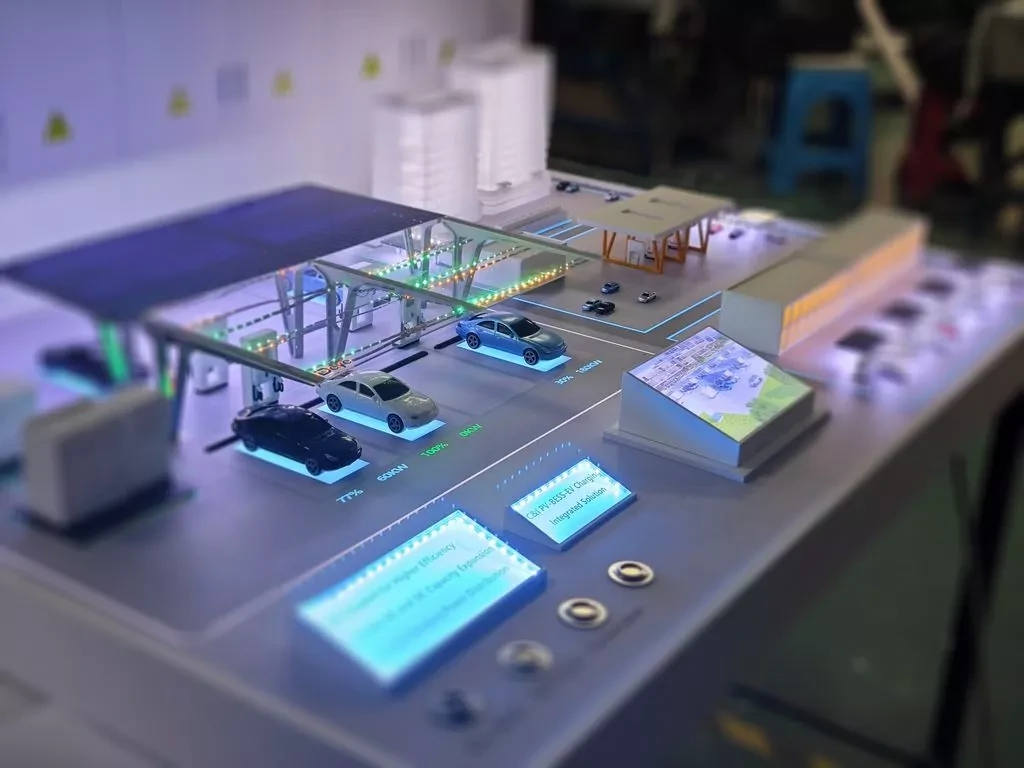
This case study details the process of producing a sophisticated scale model representing urban energy ecology, often presented as an interactive sand table model. The journey involves meticulous planning and execution to achieve a near-authentic representation.
1. Preparation: Laying the Foundation
To achieve a 90% restoration degree for a complex scale model, thorough preparation is essential. This involves sourcing specific materials and ensuring tools are meticulously calibrated.
Materials:
* PVC board: Used for base plates, foundations, and general structure.
* Acrylic board: Ideal for transparent elements, facades, and signage.
* ABS sheet: Excellent for constructing durable frameworks and mechanical components.
* Ultra light clay: Perfect for detailed sculpting and filling interior spaces.
* Acrylic pigment: For precise coloring and texture application.
* Metal wire: Used to simulate underground utilities and structural elements.
* Simulated lawn: Adds realistic ground cover to the sand table model.
* Solar panel model: A key component for photovoltaic representation.
* LED light strip: Crucial for lighting effects and simulating operational elements.
Tools:
* Laser cutting machine: Essential for precise cutting of intricate patterns and shapes from various materials.
* Hot melt glue gun: Used for quick, strong bonding during assembly.
* Drill: Necessary for creating holes for hardware, wire embedding, and component mounting.
* Art knife: Vital for detailed carving and trimming.
* Color palette: Helps in selecting and mixing colors accurately.
* Spray gun: Ensures uniform color application on large surfaces.
* Tweezers: Essential for handling small parts and delicate components.
All materials should be procured well in advance. Tools must be tested and calibrated beforehand to guarantee smooth production flow for scale model creation.
2. Core Production Process: Building from Structure to Detail
The heart of creating a compelling scale model lies in its construction, meticulously building from the foundational structure (“skeleton”) to intricate details.
A. Framework Construction: Establishing the Urban Texture
-
Base Plate & Foundation Structure: Using laser-cut PVC board, the model base plate is assembled, defining urban functional zones like “PV Livestock Area,” “Agricultural PV Complementary Area,” and “Substation.” ABS sheets are then cut and assembled to form the “skeleton” of buildings, power facilities, and road networks, secured with hot melt glue or screws to establish a preliminary spatial framework.
-
Road & Pipeline Network: Transparent acrylic board is cut to shape roads, with lane markings carefully carved. Metal wire is shaped to represent underground pipelines, meticulously embedded within the base plate at designated locations, then covered with PVC board to convey the layered feel of urban infrastructure.
B. Architecture & Facilities: The Key to Restoration Degree
-
Architectural Model:
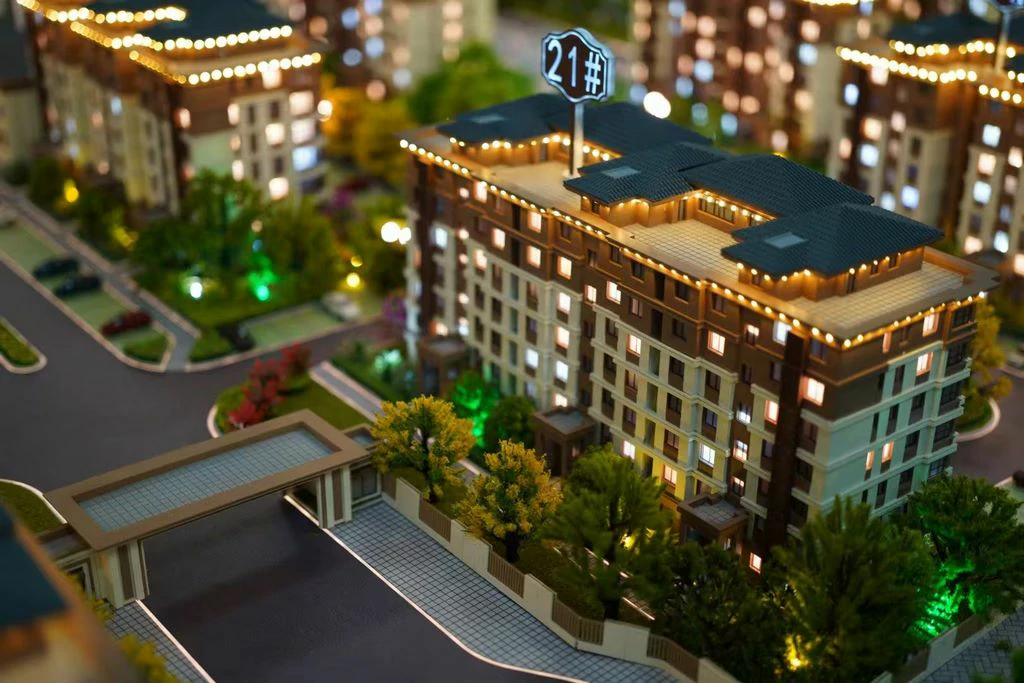
- High-Rise Buildings: Building contours are cut from acrylic panels, filled with ultra light clay for internal structure, then clad with PVC panels for realistic facades, with window details precisely carved.
- Industrial Facilities (e.g., Power Stations): The main structure is built using ABS sheet. Prominent features like chimneys or cooling towers are cut separately and integrated. The exterior is then detailed using PVC sheet to capture the industrial aesthetic.
-
Energy Facilities:
- Wind Power: A wind turbine tower body is fabricated from ABS sheet. A small electric fan is integrated at the top, controlled to simulate operational movement in advanced scale model setups.
- Photovoltaics: Solar panel models are arranged according to scale and architectural design. They are often supported by transparent acrylic panels to visualize their integration under the “agricultural PV complementarity” concept.
- Hydropower: Blue PVC board simulates water bodies. Dams and hydropower facilities are constructed from acrylic or ABS. LED light strips are embedded to simulate water flow, light effects, and illuminate operational aspects.
C. Scene Filling: Injecting Life into the Model
- Vegetation & Landscape: Realistic lawn patterns and paving are simulated. Trees and shrubs are sculpted from ultra light clay, positioned near buildings for aesthetic balance.
- Vehicles & Characters: Small-scale replicas of relevant vehicles (like scale model electric cars) are placed on roads. Pedestrians can be fashioned from ultra light clay to add human element and scale.
- Identification System: Laser-cut acrylic signboards (e.g., “PV Livestock Area,” “Agricultural PV Complementary”) are strategically placed to enhance the model’s realism and informational value.
3. Post-Processing: The Finishing Touches
The final stages significantly enhance the model’s appearance and functionality, transforming a raw structure into a compelling, interactive piece.
A. Coloring Process: Achieving Visual Fidelity
- Manual Coloring: Applying acrylic pigment meticulously to buildings and features ensures accurate color representation, paying special attention to color gradation on facades and windows.
- Spray Painting & Color Coating: Using a spray gun provides even coverage for large flat areas like roads or water features, minimizing visible color discrepancies.
- Detail Color Filling: Fine-tuning involves carefully coloring gaps between components and smoothing edges with small brushes to ensure seamless color transitions.
B. Lighting & Interaction: Bringing the Model to Life
- Lighting System: Embedding LED light strips within roads or building interiors simulates operational lighting for nighttime viewing. For advanced models, solar panel models incorporate small LEDs that “generate” light (simulating power generation) when exposed to light, illustrating energy interaction logic.
- Dynamic Effects: Simulating operation is key. The wind turbine model‘s fan can be powered on. Photovoltaic systems can be linked to trigger lighting effects, transforming the scale model from static representation to a dynamic demonstration.
4. Achieving High Restoration: Proportion, Detail & Logic
Hitting the 90% restoration degree requires precision and attention to detail.
- Proportional Control: Strict adherence to real-world scales (e.g., 1:100) is crucial for maintaining authentic spatial relationships between elements.
- Detail Polishing: Features like architectural windows, facility signage, vegetation texture, and component seams are meticulously refined for maximum realism, ensuring the model looks detailed up close and possesses good layering and depth when viewed from a distance.
- Scenario Logic: Layouts mirror real-world concepts like “coordinated wind-solar-water storage” and “agricultural PV complementarity.” Ensuring logical alignment and interaction between energy facilities and urban functional zones is vital for credibility.
In summary, crafting this high-fidelity scale model (often presented as an engaging sand table model) relies on careful preparation, a systematic construction process focusing on both structural integrity and fine detail, and crucial post-processing with coloring and dynamic lighting. This approach successfully restores the complex “skeleton” and intricate details of urban energy ecology, resulting in a vibrant, interactive model that effectively showcases the integration of scale model technology within the city landscape. The process demonstrates the capabilities in producing sophisticated industrial model representations.