Industrial Engine Scale Models | Custom Machinery Model Maker
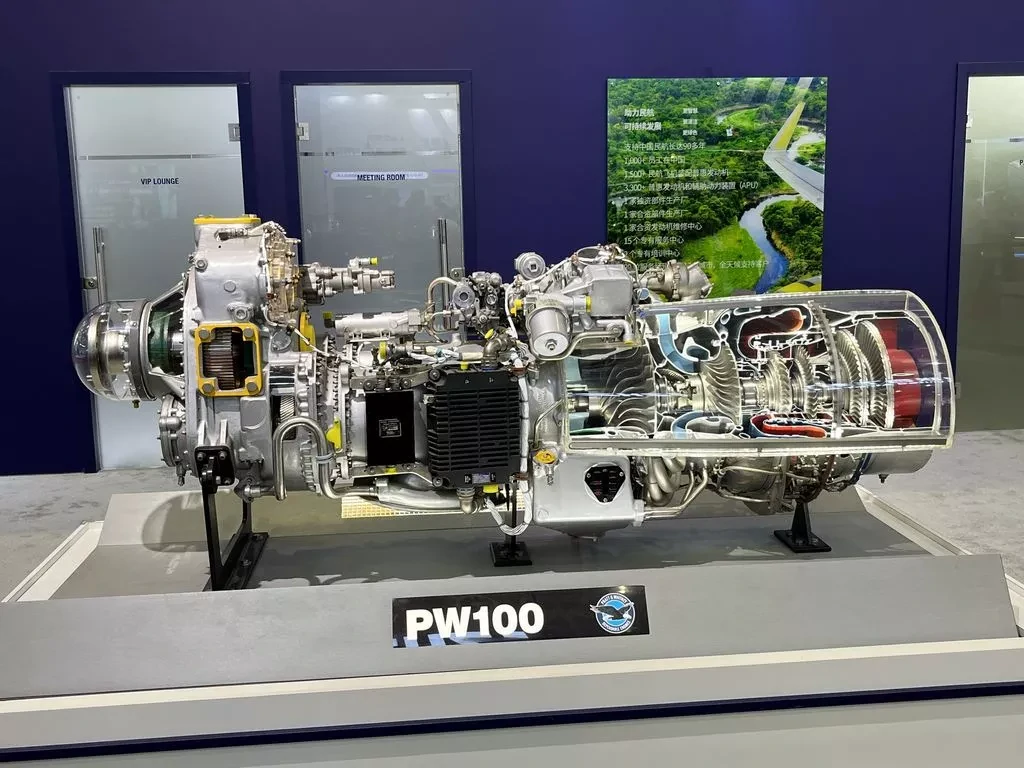
Industrial engine model making is the process of reducing and restoring the core structure, component forms, and operating principles of specialized engines in the industrial field (including diesel, gas, turbine engines, etc.) to a predetermined scale, integrating precision carving, material simulation, component splicing, and other processes to create a solid scale model that combines professionalism, practicality, and aesthetics. Its core value lies in overcoming the constraints of large industrial engines, their precise structure, and closed operation. It transforms abstract mechanical principles and complex assembly relationships into observable, detachable, and interpretable small carriers, which are widely used in enterprise exhibitions, technical training, college training, popular science education, and model collection scenarios. It is an important sand table model that connects mechanical theory with industrial practice.
1. Understanding Industrial Engine Scale Models
The production of industrial model is different from ordinary toy ornaments. The core is “precision replication, principle fitting, and realistic texture”, which is a comprehensive work that integrates mechanical engineering, materials science, and precision technology. The core concept can be decomposed into three key dimensions. Firstly, there is the design of proportions and the restoration of form, which are the foundation of production. The proportions need to be combined with the actual size and usage scenarios of the engine. For small collections and popular science models, the proportions are mostly 1:20 to 1:5 scale model, while for training and exhibition models, the proportions are mostly 1:10 to 1:15. It is necessary to accurately restore the overall outline of the engine, the layout of the cylinder body, and other core forms to avoid proportion imbalance. Next is the replication of the core structure, which is the soul of the model. It is necessary to focus on restoring core components such as cylinders, crankshafts, camshafts, etc., in order to fit the real assembly relationships and operational logic. Finally, there is the adaptation of materials and processes. Metal alloys and resins are suitable for precision components, combined with 3D printing, CNC machining and other processes to ensure the texture and mechanical accuracy of the 3D printing model.
2. Questions and Answers in the Production of Industrial Engine Models
In the production of industrial engine scale model, there is often a challenge of replicating precision components and aligning them with operating principles. The following two high-frequency questions are answered through practical experience, balancing practicality and operability.
Question 1: The core components of industrial engines are densely packed and have complex assembly relationships. How to ensure accurate replication of component details in the scale model, while ensuring smooth connection of components and avoiding assembly lag and shape distortion?
Answer: The core is “precise data acquisition, precision machining, and layered assembly”. Before production, refer to the official engine drawings, mark the dimensions and assembly clearances of each component, and obtain accurate data through scanning modeling; Priority is given to using 3D printing and CNC polishing for component processing to ensure that dimensional errors are controlled within a reasonable range; During assembly, a layered approach is adopted, first fixing core components such as the cylinder block and crankshaft, and then assembling auxiliary systems. The joint clearance is calibrated piece by piece, and the flexibility of the components is repeatedly tested to avoid jamming and shape distortion.
Question 2: Industrial engine models need to balance mechanical texture and durability. How to choose suitable materials and processes to avoid stiff and easily worn materials, while also conforming to the real engine texture?
Answer: The core is “material matching, process adaptation”. The core power components are made of aluminum alloy and copper alloy, restoring the mechanical texture of metal. The auxiliary components are made of high-strength resin, balancing lightweight and durability; In terms of craftsmanship, the surface of the components is polished and polished to match the true color of the engine. The joints are fixed with invisible glue and micro screws to ensure sealing and improve durability; Adding a micro lubrication layer to easily worn parts extends the service life of the 3D printing model and achieves a balance between texture and durability.
3. The benefits of customizing industrial engine models
Compared to standardized models, custom machinery model have three core advantages: adaptability, pertinence, and practicality. Firstly, it has strong adaptability and can be fully customized according to the specified engine model and proportion requirements, accurately meeting the needs of different scenarios such as enterprise exhibitions and college training, achieving one-to-one adaptation. Secondly, it is targeted and can focus on restoring the core technology and exclusive identification of the engine, highlighting the advantages of the enterprise’s products or teaching priorities, and meeting personalized needs. Thirdly, it is practical and diverse, with values such as display, practical training, and collection. It can be used as a carrier for enterprise promotion, teaching aids for college training, or as a collectible ornament. The material and craftsmanship can be adjusted according to needs, and the cost-effectiveness far exceeds standardized models, maximizing the professional value of the industrial model.
In summary, the production of industrial engine scale model is a combination of precision technology and mechanical expertise. By accurately disassembling core concepts, solving production pain points, and selecting customized solutions, the sand table model can not only restore the mechanical essence of industrial engines, but also meet actual usage needs, helping to promote industrial technology dissemination, professional talent cultivation, and enterprise brand promotion