Custom Sculpture Scale Models | Professional Art Model Production
Sculpture model production involves reducing or proportionally restoring original design concepts and classic sculpture prototypes. This process integrates molding, carving, polishing, and coloring techniques to create a physical carrier combining ornamental, realistic, and collectible qualities. Its core value lies in transforming abstract artistic concepts or grand sculptural works into tangible, disseminable small models. These models retain the artistic essence and form characteristics of the original while considering portability and detail presentation. They find application in artistic creation deduction, sculpture teaching, cultural and creative collections, exhibitions, and landscape planning, serving as a vital bridge connecting art design, physical creation, classic dissemination, and public appreciation.
1. Core Concepts in Sculpture Model Making
Sculpture model making differs from ordinary handmade ornaments, centered on the core principles of “integrating form and spirit, achieving precise details, and employing delicate craftsmanship.” It is a comprehensive endeavor merging artistic aesthetics, materials science, and manual skill. The core concept can be broken down into three key dimensions.
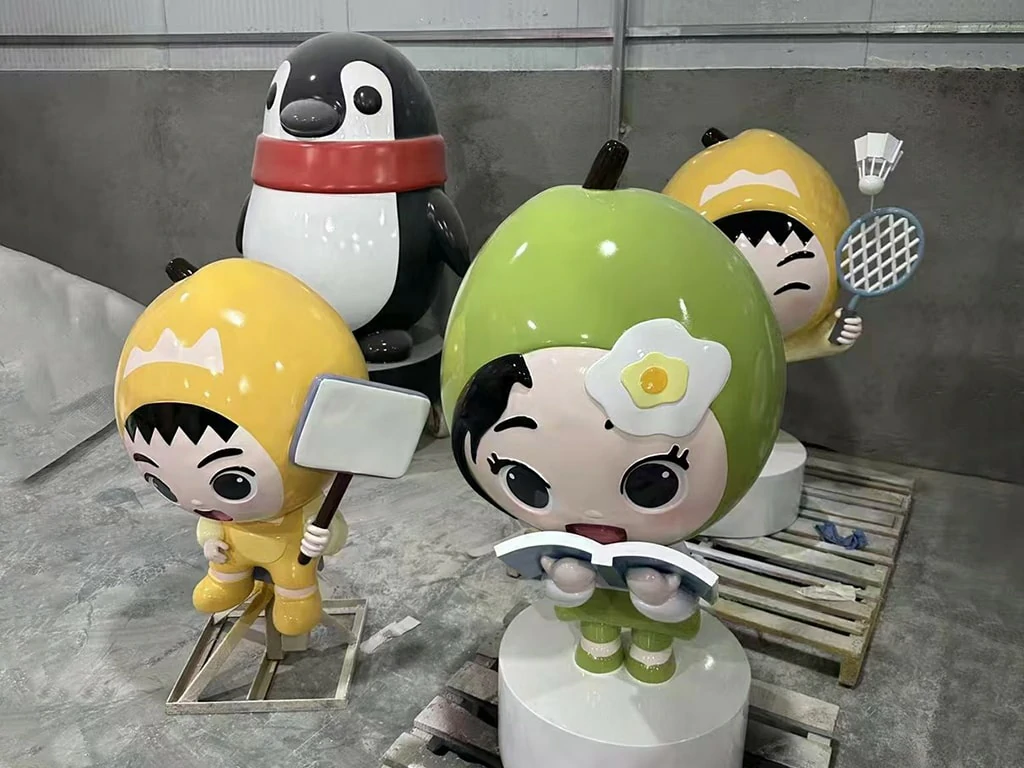
Firstly, proportional design and form restoration are fundamental prerequisites. Proportion selection depends on the original size and model purpose. For small collectibles, scales like 1:10 to 1:20 are common, whereas teaching and exhibition models often use 1:5 to 1:10. Accurate restoration of the sculpture’s overall outline, dynamic posture, and proportional relationships is essential to prevent form distortion. Secondly, core details and artistic expression constitute the soul of the model. This requires replicating the sculpture’s lines, textures, expressions, clothing patterns, and other details, balancing precise form with the original’s artistic temperament to highlight its three-dimensional sense and impact. Finally, material and craftsmanship adaptation is crucial. Material choice must align with the sculptural style; resin and plaster suit fine carving, while metal is ideal for simpler, more modern designs. The craftsmanship involves shaping, carving, polishing, and coloring to ensure smooth details and delicate texture.
2. Questions and Answers in Sculpture Model Making
Producing sculpture models often presents challenges, particularly in reproducing intricate details and textures. Based on practical experience, here are answers to two high-frequency questions, balancing practicality and operability.
Question 1: The lines, textures, and facial expressions in the original sculpture are complex. How can we ensure accurate replication of the details in the model while preserving the artistic temperament of the original work and avoiding stiff details and distorted facial expressions?
Answer: The core strategy is “precise replication, delicate polishing, and facial expression calibration.” Before production, meticulously study original photos and design drawings, marking line directions, texture patterns, and facial features, and sketching detailed schematic diagrams. During shaping, use soft materials to outline the general form, then employ fine tools for detailed carving. Ensure lines are smooth and natural, and textures conform to the original. Polishing requires a layered approach to avoid scratching details and achieve a smooth, delicate surface. Finally, calibrate facial expressions and body posture based on the original work to ensure the model not only restores details but also conveys the original’s artistic charm.
Question 2: Different styles of sculptures (realistic, abstract, relief) suit different materials and techniques. How to choose the appropriate material and technique to avoid conflicts between material and style, and techniques that fall short of expectations?
Answer: The core principle is “style adaptation, material matching, and process correspondence.” For realistic sculptures (figures, animals), prioritize resin and plaster for fine carving of expressions and textures, combined with manual coloring techniques to restore true texture. Abstract sculptures are well-suited to metal or acrylic, highlighting simple, sharp lines through cutting and polishing techniques to enhance three-dimensionality. Relief models benefit from thin resin boards and layered carving technology to emphasize layered texture. Adjust material grade according to budget to ensure process compatibility and avoid issues like rigid materials or rough craftsmanship.
3. Benefits of Customizing Sculpture Models
Compared to standardized models, custom sculpture models offer three core advantages: adaptability, relevance, and practicality.
First, they possess strong adaptability. Custom models can be tailored to fit the customer’s design concept, original prototype, and specific proportion requirements, ensuring a precise fit for the intended usage scenario. This customization benefits artistic creation deduction, teaching aids, and cultural and creative collections.
Second, they offer targeted benefits. Customization allows for highlighting personalized needs and artistic characteristics. These models can not only replicate the essence of classic sculptures but also restore the original design concept, adding exclusive logos to showcase unique taste.
Third, they provide practical and diverse applications. Custom models serve valuable roles in artistic appreciation, teaching demonstration, collection, and commemoration. They function as auxiliary tools for artistic creation, visual aids in teaching, or as cultural and creative products and commemorative ornaments. Their cost-effectiveness significantly outweighs standardized models, maximizing the artistic and practical value of sculpture models.