optimized for SEO:
Intelligent Breeding Sand Table Models | Smart Agriculture Models
Case Study: Production of an Intelligent Aquaculture Sand Table Model
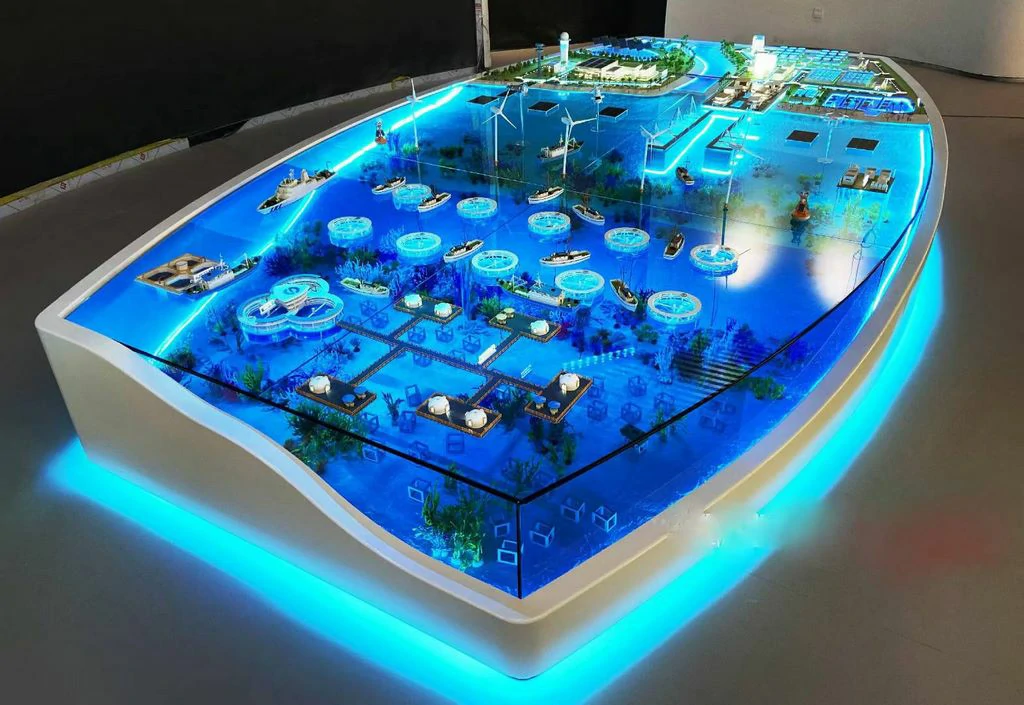
This case study details the production of an intelligent aquaculture sand table model, designed to achieve a high level of reproduction (approx. 90%) of modern intelligent farming scenarios. We will outline the production process, material selection, and post-processing coloring techniques.
Manufacturing Process
The manufacturing process employs a combination of modular and refined techniques. Initially, professional software is used to create a detailed 3D printed model and divide the breeding area into functional modules, such as scale model ponds and monitoring zones. These modules are then cut and assembled to scale, maintaining proportionality. The aquaculture ponds are produced layer by layer; the base layer simulates the pond bottom and foundation, while the upper layers shape the water surface effect. Details of breeding facilities and monitoring equipment are meticulously carved and assembled to ensure authenticity.
Material Selection
Materials are chosen for durability, realism, and functionality. The base is constructed from high-density board for stability. The main body of the breeding ponds utilizes transparent scale model materials (often acrylic or plexiglass), facilitating interior viewability and simulating water. Land areas are covered with green simulated turf for a natural appearance. Scale model components like plastic sheets offer ease of processing for various elements, while metal small parts add necessary texture. LED light strips are integrated to simulate lighting conditions and highlight key features, enhancing the industrial model‘s visual appeal.
Post-Processing Coloring
To enhance realism and vibrancy, several post-processing steps are undertaken. The base and edges of the transparent materials are polished for smoothness. A second coat of primer is applied. Land areas are colored using green acrylic pigment, creating a natural grassland effect through careful shading and depth transitions. Blue acrylic pigment is applied to the transparent surfaces representing water, followed by the use of specialized tools to create a realistic water wave texture. Scale model elements, such as breeding facilities and equipment, are painted with corresponding pigments to match their real-world counterparts. Finally, the LED light strips are installed and debugged, adjusting brightness and color to highlight key areas and evoke a technological feel, crucial for an accurate industrial model representation.
Conclusion
This intelligent farming sand table model effectively reproduces modern intelligent farming scenarios through careful design, production, rational material selection, and meticulous post-processing. It serves as a powerful tool to intuitively and effectively demonstrate the concept of intelligent farming, offering insights into complex agricultural systems through a tangible scale model.