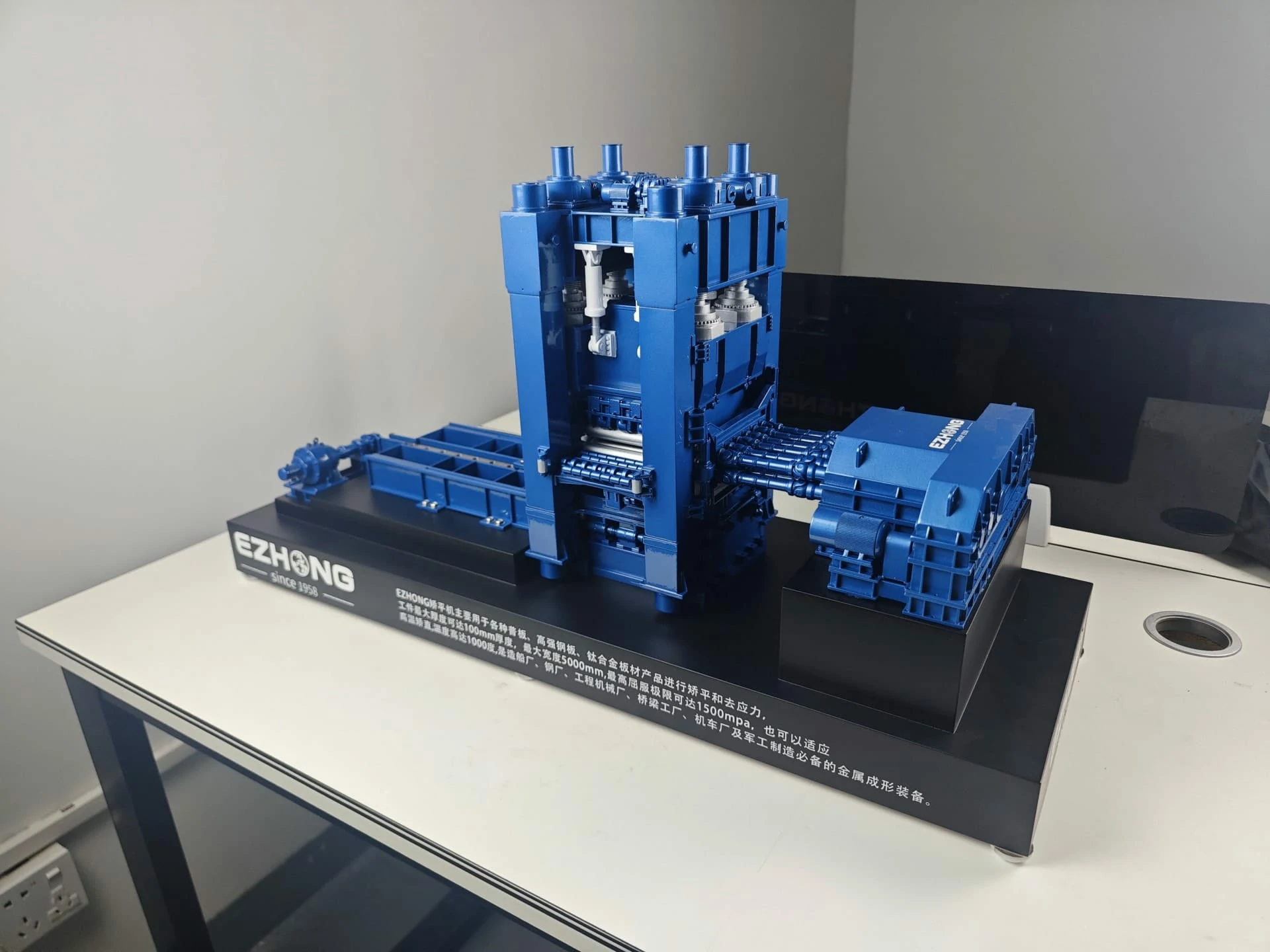
Scale Model Manufacturing Process: Complete Guide to Creating a 200-Level Leveling Machine Model
1. Material Preparation Stage
The foundation of this scale model begins with meticulous material selection. ABS engineering plastic serves as the primary structural material, chosen for its superior toughness and ease of fabrication, making it ideal for conveying the robustness of industrial equipment in a scale model format. Transmission components are meticulously crafted from brass rods, while precision elements such as bearing seats and gear sets undergo precise machining on lathes. The workbench is fabricated from 5mm acrylic sheet, expertly laser-cut and surface-treated with sandblasting to emulate a metallic texture—a common technique in industrial model production. Hydraulic piping employs medical silicone tubing for heat shrink molding, ensuring the fluid lines bend with the exact same curvature as found on real machines, a critical detail for authentic scale model replication.
2. Core Component Manufacturing Process
This section details the fabrication of the model’s essential mechanical parts.
Rack Assembly: The ABS rack structure is assembled using precise mortise and tenon joints as specified in the design drawings. For enhanced structural integrity, a 2mm steel skeleton is embedded in key load-bearing zones. Joints are meticulously welded using chloroform solvent, followed by polishing with 800-grit sandpaper to eliminate any visible step differences, a standard procedure in scale model construction.
Roller System: The brass roller cores are precision nested and combined with ABS coating layers. Following this integration, the assemblies undergo trimming on a micro lathe to achieve exact roundness within ±0.1mm tolerance. At both ends of each roller set, 3D printed 304 stainless steel simulated bearing seats are securely installed, showcasing modern manufacturing techniques in this industrial model.
Hydraulic Device: The hydraulic system utilizes transparent resin for the cylinder body, with a red dye suspension integrated inside to simulate realistic fluid movement and enhance visual appeal. The control mechanism employs a micro solenoid valve for dynamic effect simulation. The pipeline system features hot air gun shaped silicone tubing, and metal clamp fasteners are strategically installed at all turning points to ensure durability and authenticity in this scale model.
3. Surface Treatment Technology
This phase enhances the model’s appearance and simulates wear and tear.
Base Treatment: A coat of gray water soil spray is applied to the entire model structure. Following application, components are inspected under UV lamp curing to identify and rectify any imperfections. Mechanical transmission parts are hand-repaired to restore their original appearance, and deliberate scratches are carefully carved into the surface using a specialized carving knife, adding realism to the industrial model.
Color Separation Spraying: The main frame adopts a matte dark gray automotive paint finish, while moving parts are coated with chrome silver color separation spray to distinguish functional elements. Precise color boundaries for equipment warning signs are achieved using 0.3mm masking tape application, a technique commonly used in scale model finishing.
Industrial Texture Enhancement: Graphite powder is applied via a dry cleaning process to the workbench surface, simulating dust accumulation often seen in industrial settings. Hydraulic components receive a simulated oil stain treatment using transparent orange paint. The transmission gear set is enhanced with brown cleaning solution to depict residual lubricant, adding significant detail to this scale model manufacturing process.
4. Dynamic Effect Implementation
This final stage brings the scale model to life, simulating operational functions.
A 12V micro motor is discreetly installed within a concealed compartment of the base structure. This motor drives the upper roller group via a magnetic coupling mechanism, enabling functional movement. The control system integrates an Arduino module for sophisticated operation, allowing for 0-5rpm stepless speed regulation—a key feature enhancing the model’s realism. The lighting system employs fiber optic light guidance technology, with miniature indicator lights meticulously replicated at the control panel to mirror the actual machine’s status displays, completing the transformation into a fully operational industrial model.