New Energy Sand Table Models | Professional Scale Model Maker
Miniature Landscape of Wind Power Plant: A Case Study in Precision Scale Model Production
1. Scale Model Production Process and Flow Design
Main Structure Construction
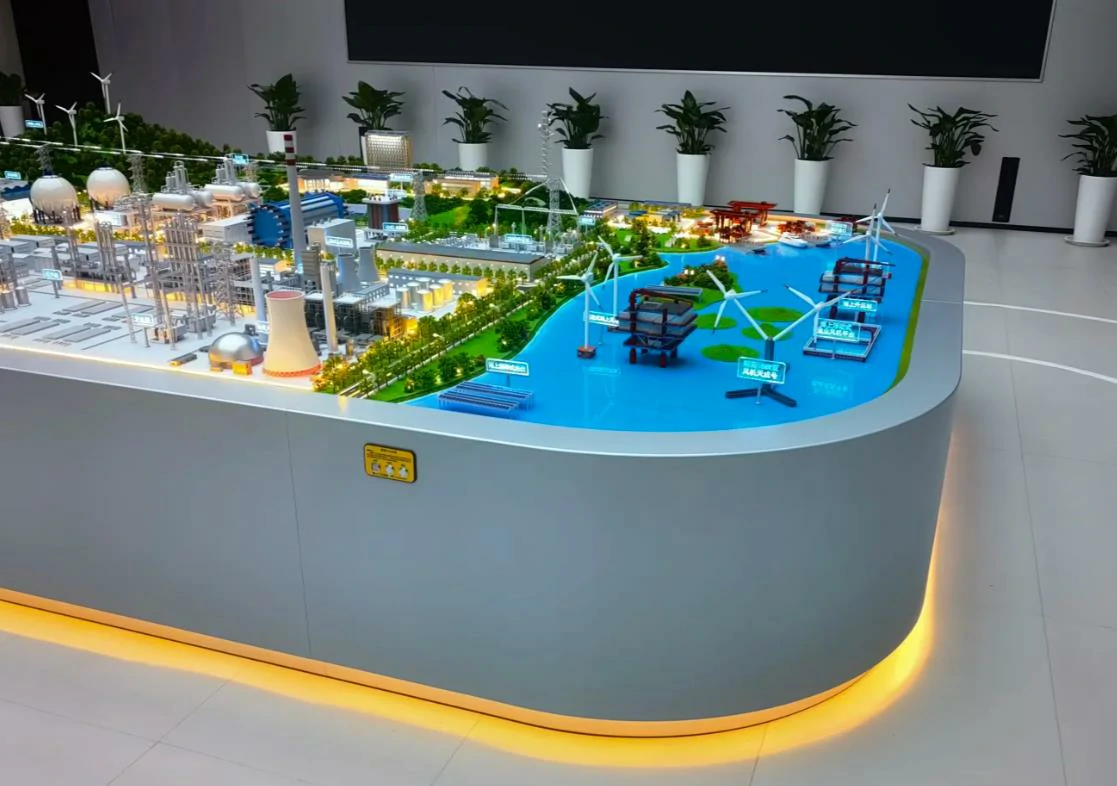
The intricate scale model features fan blades meticulously carved from lightweight oak, combined with precision CNC cutting to achieve exacting aerodynamic curves. The tower structure utilizes reinforced PVC pipes nested with copper wiring, with the base designed using high-density foam to accurately simulate the complex weight distribution system. Undulating mountain terrain and site features are expertly shaped and strengthened through specialized foam carving techniques.
Dynamic System Integration
- Blade Rotation: Advanced micro-bearing systems coupled with magnetic levitation technology ensure exceptionally smooth and low-resistance blade rotation, faithfully replicating real-world performance.
- Lighting System: Fiber optic bundles integrated within the tower structure connect to precision LED lighting at the top, creating a realistic simulation of warning light flashes.
- Environmental Interaction: A concealed micro-motor activates thin gauze elements, effectively simulating the subtle cloud and mist effects that enhance the scene’s atmospheric realism.
2. Innovative Material Applications
Blade Material
Precision-engineered blades combine aviation-grade lightweight wood with strategic carbon fiber patches, achieving an optimal balance between structural integrity and detailed performance.
Tower Processing
Tower components feature either anodized and aged aluminum alloy pipes, or simulated steel cables wrapped with galvanized iron wire, ensuring both aesthetic authenticity and structural strength.
Ground System
The foundation landscape employs a specialized resin mixed with quartz sand, finished using dry-sweeping techniques to authentically replicate wind erosion patterns and vegetation coverage.
Special Effect Materials
- Wind Indicator: A transparent PET film wind vane, expertly carved and suspended at the tower summit, provides a clear visual indicator of wind direction.
- Light and Shadow Effects: Precision application of UV-curing adhesive along blade edges creates realistic textures mimicking the appearance of sunlight refraction.
3. Post-Processing and Coloring Techniques
Base Treatment
Following a comprehensive matte primer application, selective polishing with 000 steel wool enhances the appearance of metal wear and industrial textures. Reinforced enamel paint dry-sweeping accentuates welding seams for improved three-dimensional effect, while magnetic powder simulation accurately depicts key bolt corrosion details.
Color System
- Primary Color Palette: The dominant industrial white (70%) color scheme adheres to new energy facility regulations, complemented by safety orange (20%) and warning red (10%).
- Environmental Integration: Multi-layered acrylic paint rendering on the chassis masterfully simulates atmospheric sky gradients and ground shadow effects.
- Detail Depiction: Fluorescent green edges on miniature foliage leaves realistically simulate the reflective coating effect commonly used in such models.
Scene Fusion
The surrounding miniature environment incorporates expertly crafted moss and model trees, secured using aerosol techniques. The wind vane, fashioned from precision-cut transparent acrylic, is suspended at the tower top, significantly enhancing the overall dynamic realism of the scale model.
4. Key Points of Restoration Control
Accuracy and Proportion
Meticulous attention to detail is maintained throughout the process, with all component sizes strictly derived from CAD drawings and verified against on-site reference photographs.
Dynamic Coordination
The blade rotation mechanism is precisely synchronized with the lighting system’s flicker pattern, creating an authentic simulation of the wind turbine’s operational state.
Environmental Adaptation
The terrain layout and vegetation selection are carefully designed to correspond with the specific local climate characteristics of the site, ensuring the model’s environmental accuracy and credibility.