Industrial Drilling Scale Models | Custom Oil Rig Model Factory
Case Study: High-Precision Industrial Drilling Platform Scale Model Production
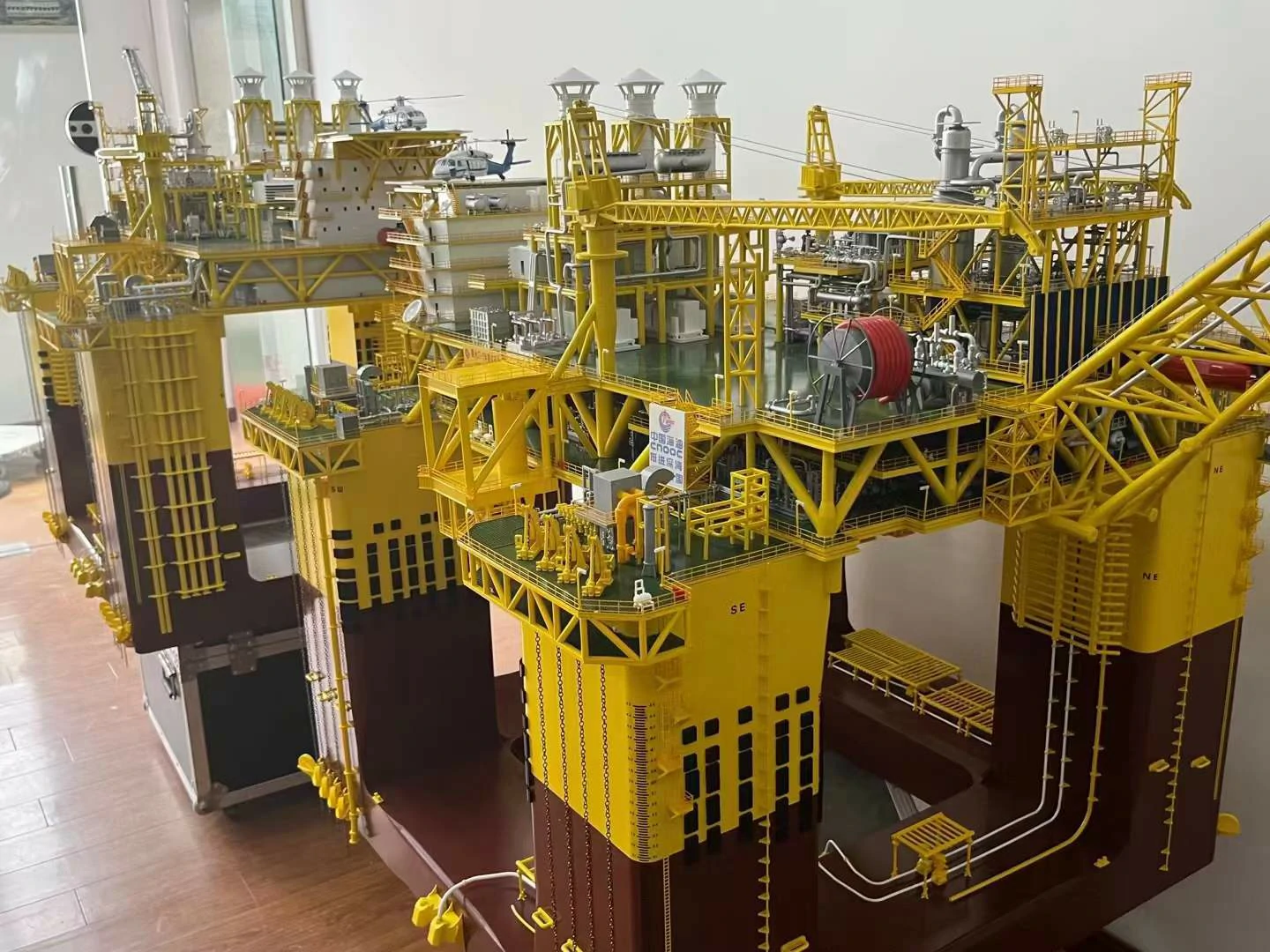
This project successfully developed a 1:50 scale onshore oil drilling platform sand table model for display and teaching purposes, achieving an impressive fidelity exceeding 90%. The scale model meticulously captures the complex steel structure, heavy equipment layout, and authentic industrial atmosphere of field operations, delivering highly realistic visual effects through advanced material and process integration.
1. Material Selection: Building a Realistic Industrial Texture with Scale Models
To achieve authentic industrial textures, the scale model utilizes multiple material combinations tailored to different functional parts:
- Main Structure: The large frames, including the derrick, base, and main load-bearing beams, are constructed using laser-cut ABS sheets and profiles. This ABS material choice balances structural strength with ease of processing, accurately depicting the welding forms and heaviness of large steel structures essential for any high-quality industrial model.
- Equipment and Mechanical Components: Key equipment such as mud pumps, turntables, top drives, and blowout preventers employs high-precision resin 3D printing model technology. This ensures the accurate reproduction of complex geometries crucial for engineering scale models.
- Detail Components: Repeated fine parts like guardrails, stairs, pipes, and numerous smaller elements utilize metal etching sheets. Their extremely thin characteristics allow for the precise reproduction of delicate steel structures found on-site. Power pipelines are effectively simulated using copper wires and hoses of varying diameters, a common technique in industrial model construction.
- Ground Foundation and Site: The base is reinforced with multiple layers of wooden boards, and the surface is covered with gypsum and sculpted mud. This technique masterfully mimics the mixed terrain of concrete flooring and compacted soil layers, adding authenticity to the sand table model.
2. Production Process: Precision Construction Techniques for Industrial Models
The production process for this scale model adopts a construction logic of “bottom-up, modular partitioning,” emphasizing structural accuracy and detail richness:
- Main Body Construction: Starting from the bottom base, ABS beams and columns are assembled into a sturdy three-dimensional frame according to the drawings. All connections are meticulously bonded with model glue, and key load-bearing parts are reinforced with metal piles drilled and embedded beforehand. This ensures the overall stability of the industrial model.
- Equipment Installation and Pipeline Laying: After finishing and polishing the printed large equipment, it is accurately installed in its designated position. Based on reference photos, thin copper pipes and hoses simulate hydraulic, fuel, and mud conveying pipelines. These are carefully bent and fixed according to the actual direction, creating a complex but orderly visual sense characteristic of scale models.
- Detail Enhancement: Manually pasted etched guardrails are installed along all platform edges, and hollow staircases are created for vertical structures. A large number of printed small parts, such as micro valves, instrument panels, and connectors, are added and installed. Warning lights are placed above the derrick, and overhead crane markers are added for authenticity. 3D printing model parts are crucial for these intricate details.
- Final Assembly and Testing: Multiple trial assemblies are conducted before final painting. This allows for checking structural interference and ensuring the equipment layout is reasonable and the derrick is perfectly vertical.
3. Painting and Aging: Enhancing Realism with Authentic Aging Techniques for Scale Models
Painting and aging are critical steps in endowing the industrial model with its soul, using a comprehensive technique of “layered spraying, key stain washing, and dust accumulation”:
- Priming and Base Color: An overall ash and soil spray establishes the base color, allowing for defect checks. Yellow or red lead primer is used as the anti-rust primer layer on the main structure. Equipment is sprayed with color separation based on function (e.g., dark gray for diesel engines, white for mud tanks), a detail vital for any scale model.
- Aging Treatment:
- Staining and Seepage Lines: A deep brown stain solution is applied to every weld, rivet, and corner, then wiped off excess after drying to highlight structural shadows and greasiness – a hallmark of authentic aging on sand table models.
- Dry Sweeping and Paint Peeling: Light gray and silver are used to dry-sweep all edge protrusions, simulating metal wear and paint peeling. Key paint peeling treatment is applied to frequently operated parts like pedals and valves.
- Dust and Stain Manifestation: Diluted natural soil particles are sprayed on the platform floor, equipment peripheries, and pipeline surfaces under the model, imitating common site accumulations. Dark brown oil paint creates an oil leakage effect under the engine and at pipeline joints.
- Final Touches: After completing all aging, final assembly is carried out. Extremely fine warning sign stickers are installed, and warning lights are coated with transparent red/orange paint. A final layer of semi-gloss protective paint seals everything, achieving uniform gloss and fixing all aged layers, completing the scale model.