Customization Scope of Static Models: From Product Replication to Enterprise Scene Restoration
In today’s digital era, the model making industry is experiencing unprecedented transformation. Driven by technological advancement and diverse market demands, traditional static model creation can no longer fully satisfy the complex requirements of modern enterprises. Consequently, more model making companies are exploring dynamic models, offering increasingly realistic and vivid product replication and enterprise scenario simulation services. This article will thoroughly examine the scope of static model customization and explore how leading manufacturers can achieve technological innovation by expanding from basic product replication to comprehensive enterprise scenario restoration.
Defining the core objective of static model customization is essential. The primary purpose of these meticulously crafted scale models is to provide enterprises with an intuitive and highly realistic means of product display and scenario visualization. These precision replicas serve multiple critical functions: commercial exhibitions, educational training, and vital support for scientific research and historical studies. As such, the scope of static model customization encompasses a wide range of applications, including but not limited to:
Product Replication (Scale Model):
This remains the foundational aspect of static model customization, representing the most common application area. Model making companies must conduct thorough research and analysis on the original products to guarantee the accuracy and completeness of the replication. This meticulous process involves faithful reproduction of the product’s appearance, structure, functionality, and other key aspects. For instance, automotive manufacturers utilize custom scale models to showcase specific vehicle designs and intricate manufacturing processes to potential customers, effectively communicating complex engineering details in a tangible format.
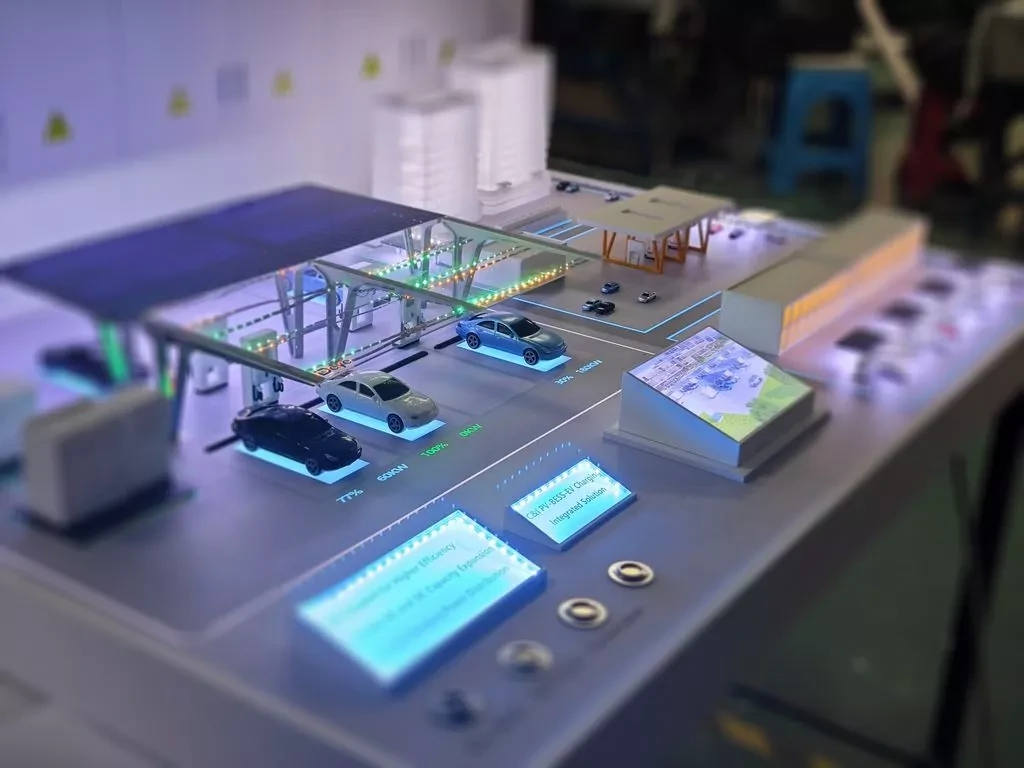
Enterprise Scenario Reproduction (Sand Table Model):
As business competition intensifies, companies increasingly prioritize shaping their brand identity and showcasing their operational environment. Static model customization offers a powerful medium for this, enabling businesses to vividly present their corporate culture, office layouts, and operational workflows. These complex sand table models often demand a high degree of creative design and adaptability to meet diverse display requirements. A prime example is seen in real estate development, where sophisticated models are employed to present property layouts, neighborhood designs, and overall architectural philosophy, allowing stakeholders to grasp the development vision in a three-dimensional format.
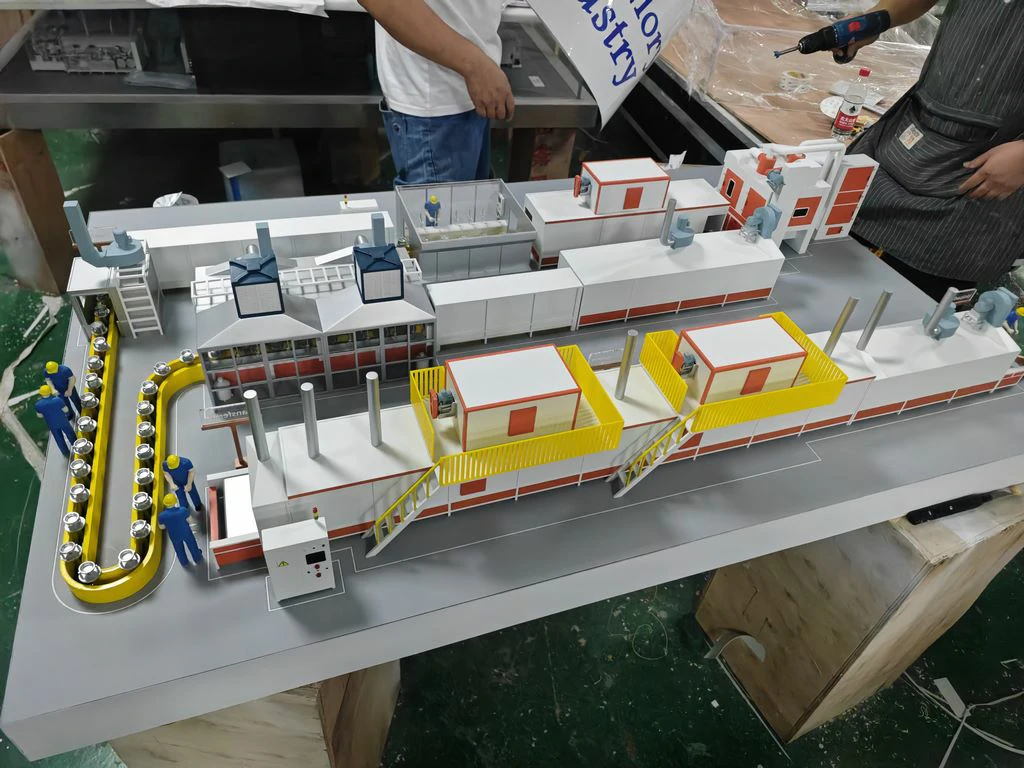
Educational and Training Applications (Industrial Model):
Static models play a pivotal role in education and vocational training. By creating tangible, three-dimensional representations of complex subjects, these models facilitate a deeper, more intuitive understanding of theoretical concepts and practical procedures. Engineering students, for example, can utilize detailed industrial models to study mechanical principles, assembly techniques, and design iterations, bridging the gap between abstract theory and hands-on application.
Scientific Research and Development (3D Printing Model):
Within the scientific community, static models are indispensable tools for research and development. The ability to create accurate, three-dimensional replicas allows scientists and engineers to examine, test, and analyze physical properties and interactions in ways not possible with two-dimensional data. Researchers in fields like physics might leverage intricate 3D printing models to visualize and investigate complex phenomena, accelerating the research and development process.
Achieving technological innovation from basic product replication to comprehensive enterprise scenario restoration requires model making companies to embrace advanced technologies and superior materials. Implementing high-precision 3D scanning techniques for data acquisition, utilizing sophisticated computer-aided design (CAD) software for intricate model design and modification, and employing high-quality materials such as resin or ABS plastic ensures both the durability and photorealistic quality of the finished product. Furthermore, close collaboration with clients to fully understand their specific requirements is paramount for delivering truly personalized and effective solutions.
The scope of static model customization is exceptionally broad, ranging from precise product replication to elaborate enterprise scenario simulation, educational tools, and scientific research aids. With continuous technological progress and evolving market needs, the field of static model customization presents boundless opportunities for growth. For model making companies, success hinges on a relentless commitment to innovation and a consistent focus on improving technical expertise to thrive amidst the competitive landscape.