Custom Exhibition Models for Petrochemical Industry: Scale Model Production Case Study
Exhibition Models Positioning
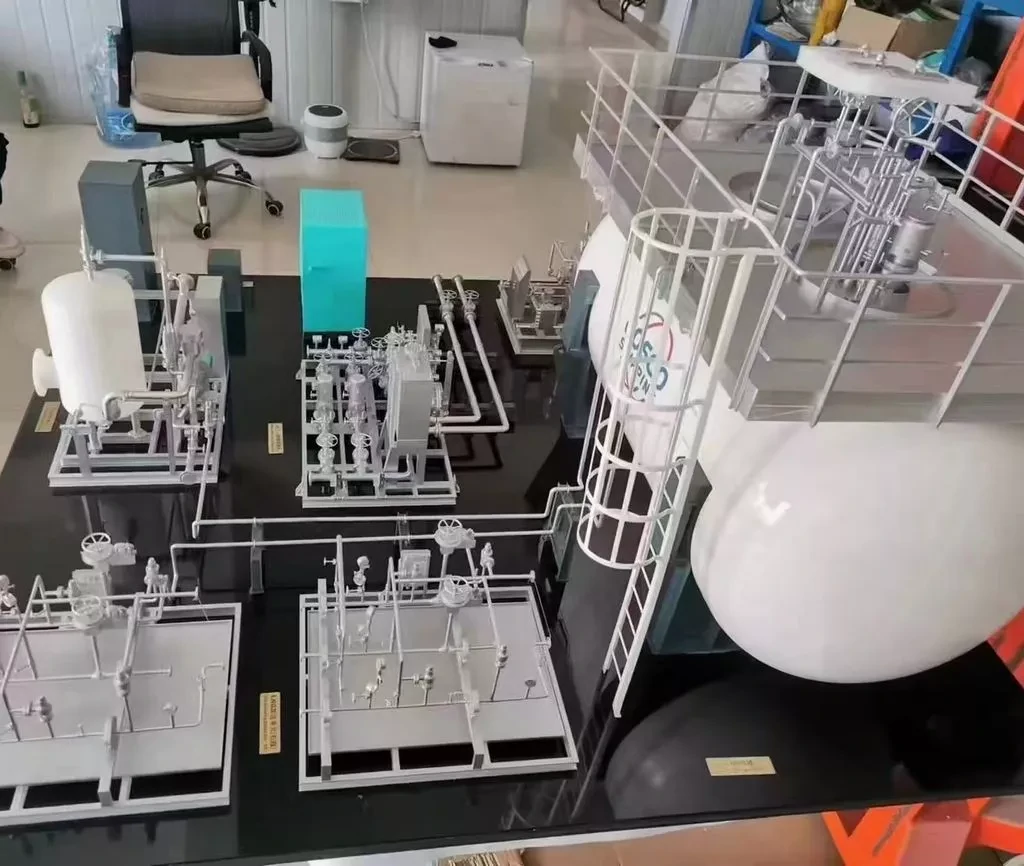
This case study details the production of a custom scale model for a petrochemical company’s exhibition hall. The primary goal was to create an industrial model that accurately reproduces the core production unit’s process flow and spatial layout within the factory area, achieving 90% accuracy. The model incorporated dynamic demonstration functionality to enhance visitor engagement.
Exhibition Models Production Process
The scale model framework was constructed using laser-cut acrylic panels. Key equipment, such as reactors and towers, was fabricated as a 3D printing model using resin 3D printing. The piping system was crafted from electroplated copper tubes, meticulously bent to the required specifications. This combination of techniques ensured the model’s structural integrity and technical accuracy.
Dynamic Components were integrated to simulate operational aspects. Micro motors drive conveyor belts, visually demonstrating material transportation. Embedded LED light strips indicate the flow of materials, while electromagnetic valves control pneumatic components, showcasing valve opening and closing mechanisms. These features transform a static industrial model into an interactive educational tool.
Terrain reproduction was achieved through sand table model techniques. High-density foam was carved to replicate the factory terrain’s contours. Simulated gravel roads were hand-laid, and fire lanes and pipe rack supports were arranged according to the actual site layout, maintaining site fidelity.
Material Selection for Exhibition Models
Equipment housing was crafted from ABS engineering plastic panels, finished with a matte metallic paint coating for durability and aesthetic appeal. The piping system employed a combination of electroplated copper tubes and transparent PVC tubes to represent different pipeline types and functions clearly. Accessory facilities included stair railings fabricated from etched plates and nylon mesh panels simulating blast walls, enhancing the model’s safety features and realism.
Coating Process
The base coat involved full coverage with an epoxy primer for rust prevention and corrosion resistance, followed by atomized putty application to fill seams and achieve a smooth surface. The layered coloring process saw equipment main bodies treated with hammered texture paint sprayed on, imparting an industrial feel. Pipe markings were applied using the water transfer printing process, accurately replicating industrial color codes (such as red fire hoses and yellow sulfur pipes). An aging treatment involved applying pastel colors to simulate oil residue buildup, using a dry brushing technique to highlight metal wear and add authenticity.
Special Details
The model featured removable heat exchanger housing, allowing visitors to view the internal pipe bundle structure. An embedded miniature camera in the chimney facilitated first-person VR views, offering an immersive experience. Magnetic nameplates were installed for easy replacement of equipment parameters, ensuring the model could be easily updated or customized.