Custom Hospital Model Factory: High-Fidelity Operating Room Scale Model Production Case Study
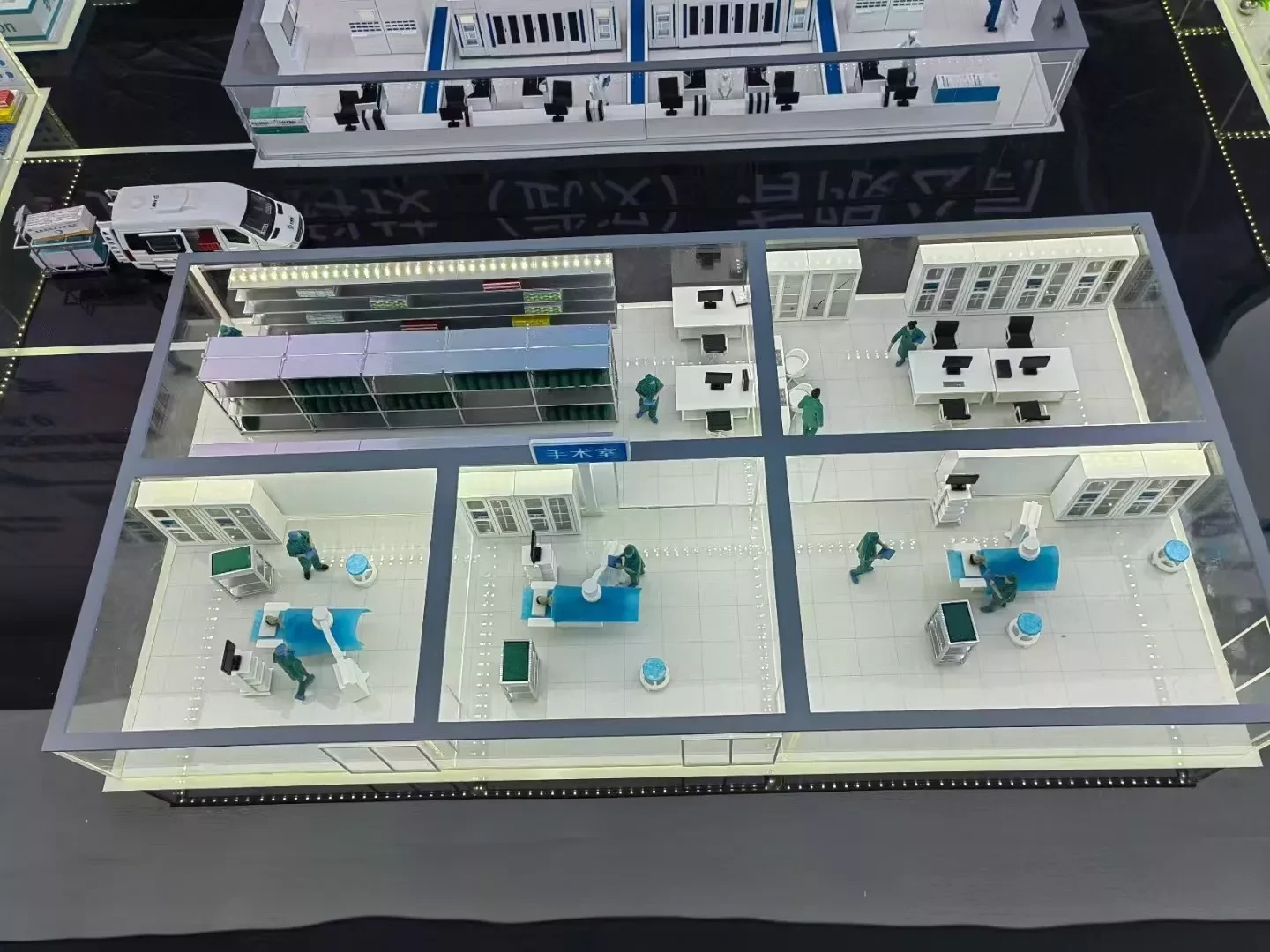
Project Overview: Tertiary Hospital Laminar Flow Operating Room Display Model
Our custom hospital model factory developed a high-fidelity scale model showcasing a laminar flow operating room for a tertiary hospital client. This precision medical model demonstrates advanced manufacturing techniques and attention to sterile environment simulation.
Phase 1: Skeletal Framework Construction
1. Main Structure Formation
Wall and Floor Modules
– Constructed using 5mm matte ABS panels precision CNC-cut with 0.2mm pre-cut edges
– Floor system employs three-layer lamination:
– Base plate engraved with track grooves
– Blue epoxy resin poured to simulate sterile flooring
– Scratch-resistant transparent film applied as protective layer
2. Laminar Flow Ceiling System
- Precision-engineered stainless steel perforated panels with 876 laser-drilled 0.3mm diameter holes (±0.02mm tolerance)
- Embedded semi-transparent frosted acrylic diffusers connected to miniature fan units
- Custom-designed support structure ensures proper airflow distribution
3. Medical Equipment Framework
- 3D-printed FDM resin equipment bases for anesthesia machines and patient monitors
- Post-processing treatment includes alcohol soaking to eliminate layer lines and achieve smooth surfaces
- Overhead hoist-trolley system fabricated from 0.8mm brass tubes with fiber-optic cable routing
Phase 2: Organ Shaping (12 Days)
1. Core Equipment Precision Machining
Surgical Lighting System
– 8-layer optical acrylic lampshade precisely machined to exact specifications
– Anti-glare coating applied using argon plasma treatment for optimal light diffusion
Operating Table Components
– Aluminum alloy frame undergoes sandblasting for consistent surface texture
– Silicone pads injection-molded with diamond-shaped anti-slip patterns
Instrument Trolley Features
– Mirror-finished steel legs treated with nano-coating for fingerprint resistance
– Tabletop precision-etched with instrument positioning indentations
2. Environmental Detail Integration
- Hand-painted blue-green anti-contamination strips applied 1.2cm above flooring
- Gradient shading technique enhances visual realism
- Laser-cut stainless steel return air grilles bonded with matching filter mesh
Phase 3: Life Infusion (9 Days)
1. Medical-Grade Color Coating
Equipment Color Separation System
– Monitor body: Matte grey base coat with precise color matching
– Control knobs: Perforated steel components individually electroplated in blue
– Emergency buttons: Fluorescent red paint application for high visibility
Aged Treatment Process
– Instrument cart edges treated with dry-brushed silver powder
– Simulated wear patterns created through controlled application techniques
2. Dynamic System Testing
Laminar Flow Verification
– Specially formulated aromatic smoke test confirms vertical airflow pattern
– Smoke particles clearly demonstrate unidirectional flow characteristics
Equipment Integration Testing
– Modular magnetic interface system enables quick plug-and-play functionality
– Seamless connectivity between all medical equipment components
Final Inspection Standards
Tactile Verification
- All sharp edges polished to achieve R0.5mm rounded corners
- Operating table silicone pads tested for ≤0.3-second compression rebound
Visual Verification
- Ultraviolet inspection confirms fluorescent marking visibility on tubing
- Magnified examination verifies fine details like needle holder teeth
Scene Reconstruction
- Contaminated area flooring accurately simulated with alcohol-diluted paint
- Medical waste bins equipped with etched warning labels
This comprehensive scale model production process demonstrates our custom hospital model factory’s expertise in creating highly accurate sand table models and 3D printing models for the healthcare industry. The finished industrial model provides an exceptional visual and functional representation of a modern operating room environment.