Experience Complex Designs Tangibly: 3D Printed Sand Table Models & Scale Models
3D printing has revolutionized the creation of sand table models, transforming how we visualize and understand intricate designs. Our company specializes in producing high-fidelity scale model solutions, moving beyond traditional methods to deliver accuracy and complexity previously unattainable.
What is a 3D Printed Sand Table Model?
A 3D printed sand table model is a powerful tool for complex design visualization. Unlike traditional, often time-consuming and less accurate, manual sand modeling, modern 3D printing technology allows intricate designs to be faithfully reproduced at scale. Our process translates 2D CAD drawings into tangible scale model representations, often at a 1:1 scale. This brings the principle of “Design is What You See, What You See is What You Get” (DYS DSWYG) into the physical world, making the design process more intuitive and effective.
The Advantage of 3D Printed Models
The shift to 3D printing models (specifically sand table models) elevates these representations from mere auxiliary tools to core communication carriers. They act as a vital “visual bridge,” enhancing understanding, facilitating decision-making, and enabling clear project display. This 3D printing model approach upgrades the sand table model significantly.
Applications of 3D Printed Sand Table Models
In Architecture: Validating Design Concepts
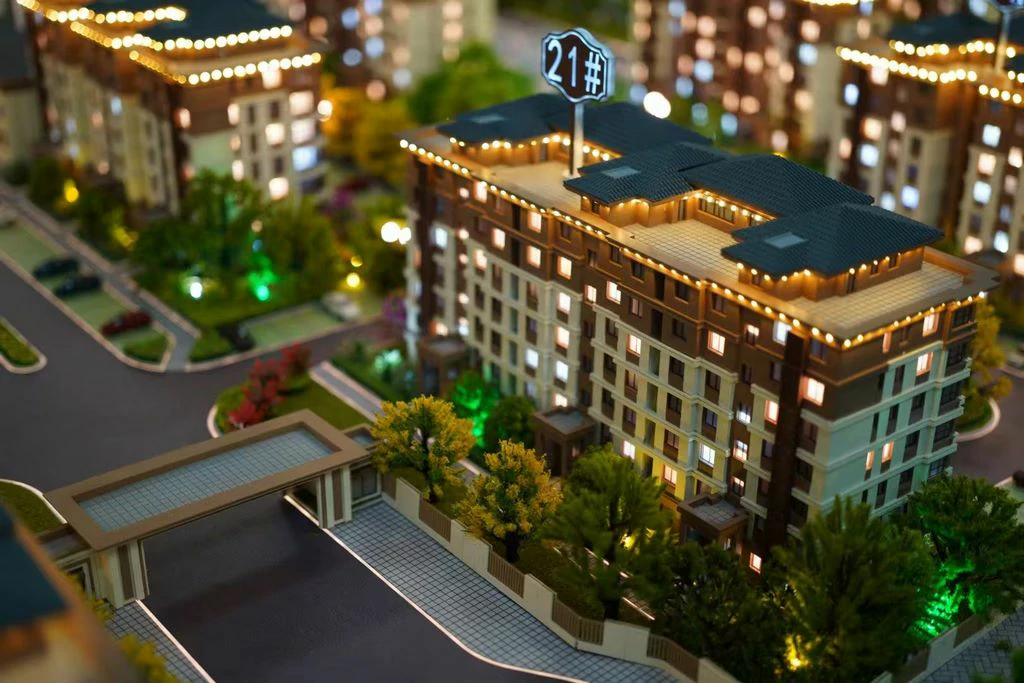
Architectural scale models created via 3D printing serve as indispensable ‘solution validators’. They allow complex architectural elements to be presented clearly, including site context, structural layouts, functional zoning, and intricate details like sunlight exposure, line-of-sight obstructions, and interior space utilization. This enables designers to quickly iterate concepts, while clients gain a clear understanding of the final vision, helping to prevent costly changes during construction.
In Urban Planning: A Miniature Mirror of the City
Our sand table model solutions provide a comprehensive miniature representation of urban environments. From intricate underground tunnel networks and subway station layouts to industrial park complexes and residential zoning, 3D printed sand table models accurately capture the three-dimensional complexity (“underground, ground, air”) of urban planning proposals. Planners can use these models to simulate traffic flow, assess population density impacts, and optimize city layouts. The public can also engage with these industrial model/scale model representations to better understand proposed developments and visualize the “Future Home” concept, increasing project transparency.
In Engineering: Decoding Complex Structures
For engineering projects, 3D printed sand table models (often referred to as engineering sandbox models) are invaluable tools for decoding complex structures. They clearly illustrate critical details, such as layered dam structures, underground pipeline networks, and safety critical points in hydraulic engineering. These scale model solutions allow engineers to verify the feasibility of design schemes proactively, enabling construction teams to anticipate potential challenges and mitigate risks before groundbreak.
Evolving: Beyond Static Display
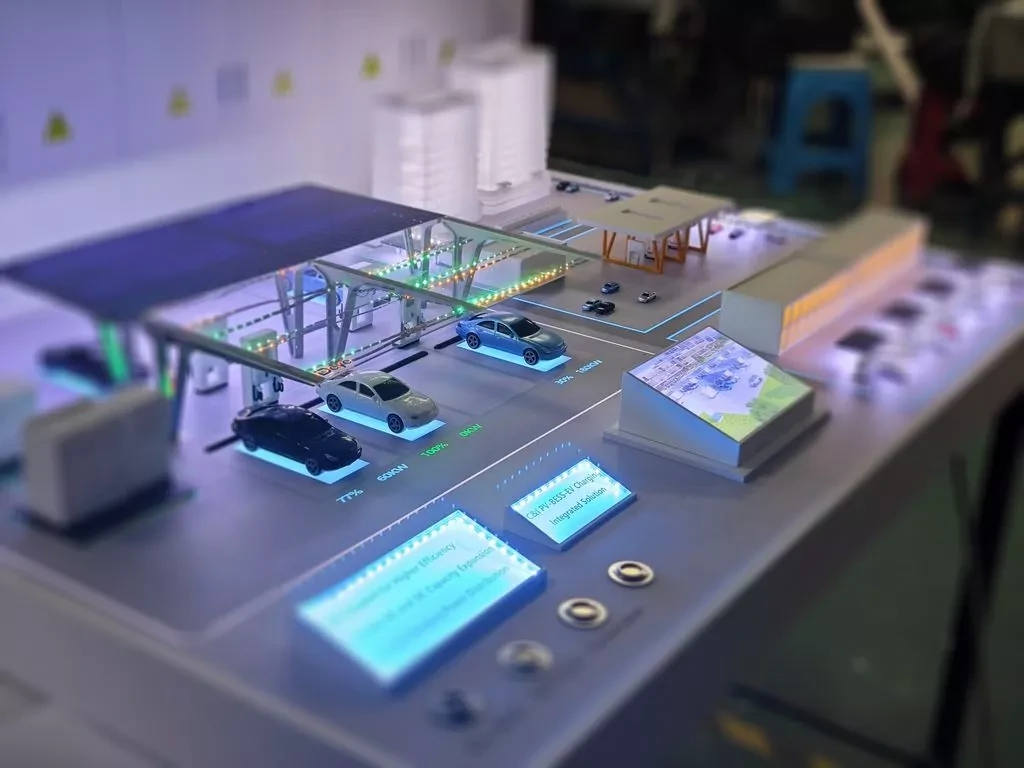
The evolution continues: integrating technology allows our 3D printed sand table models to become interactive experiences. Users can engage with the model via smartphones or tablets, clicking on different components (buildings, roads, infrastructure) to access supplementary information like apartment layouts or traffic flow simulations. This transforms the scale model into an interactive digital twin of the physical space.
Impact: Reshaping the Industry
The widespread adoption of 3D printed sand table models is poised to reshape the industry landscape:
- For Design: Reduced time verifying concepts and shortening the design cycle.
- For Construction: Minimizing errors on-site and improving overall project efficiency.
- For All Stakeholders: Reducing communication barriers and enhancing project transparency.