optimized for SEO, keeping all original formatting intact:
Analysis of the Custom Industrial Equipment Model Production Process
The creation of an industrial model requires meticulous integration of industrial design principles and detailed process engineering, from initial material selection to final post-processing. The following breakdown outlines the core production process for a scale model:

1. Preliminary Preparation: Design Analysis and Material Selection
Disassemble the equipment drawings to clearly define the form of each component (e.g., main compartment, power components, brackets).
- Material Selection:
- Main Compartment: ABS plastic chosen for its ease of polishing and coloring post-printing, yielding a metallic-like texture.
- Power Components: Engineering plastic used for 3D printing; painted yellow post-printing to restore the original equipment identification.
- Bracket: PVC sheet selected for its low cost, ease of cutting, and ability to simulate industrial blue paint after coloring.
2. Core Production Process: Step-by-Step Restoration of Structural Details
-
3D Printing Molding (Complex Structures)
- Utilize 3D printers to fabricate intricate components like the main compartment and power parts.
- Precisely control layer height and print accuracy to ensure smooth surfaces (e.g., cylindrical chambers) and functional details (e.g., gear engagement).
- Post-print cleanup: Remove support structures with a small knife, followed by surface polishing using progressively finer sandpaper (400 mesh → 600 mesh) to achieve rounded edges and eliminate layer patterns.
-
Manual Cutting and Assembly (Simple Structures)
- Craft the bracket by cutting PVC sheet: First, mark the cutting lines accurately with a ruler, then precisely cut using a craft knife.
- Assembly: Bond the bracket to the main compartment using hot melt adhesive. Carefully adjust the bracket’s position and angle multiple times to ensure the simulated support structure aligns correctly with the original equipment’s design.
3. Post-Processing: Coloring and Detail Polishing
-
Base Color Spraying
- Apply a silver gray primer to the main compartment using a spray gun to establish a metallic texture base.
- Spray a yellow primer onto the power components to restore the equipment identification color.
- Use an industrial blue primer on the bracket to simulate factory-applied paint.
- Ensure uniform color coverage and avoid flow marks by spraying with a consistent, steady hand movement.
-
Detail Coloring and Aging
- Main Compartment: Employ a fine-bristled brush and silver gray pigment to touch up seams, enhancing the metallic appearance.
- Power Components: After the yellow primer dries, apply black paint to the designated areas (e.g., “RX”) and finish with a coat of transparent varnish for a glossy, industrial look.
- Bracket: Once the blue primer is dry, lightly abrade the edges with sandpaper to simulate long-term wear and tear, adding authenticity.
-
Overall Polishing and Buffing
- After coloring, gently polish the entire model with 800-grit sandpaper to remove brush marks and imperfections.
- Final buffing: Use a polishing cloth dampened with a polishing solution to achieve a mirror-like finish, restoring the equipment’s industrial model texture.
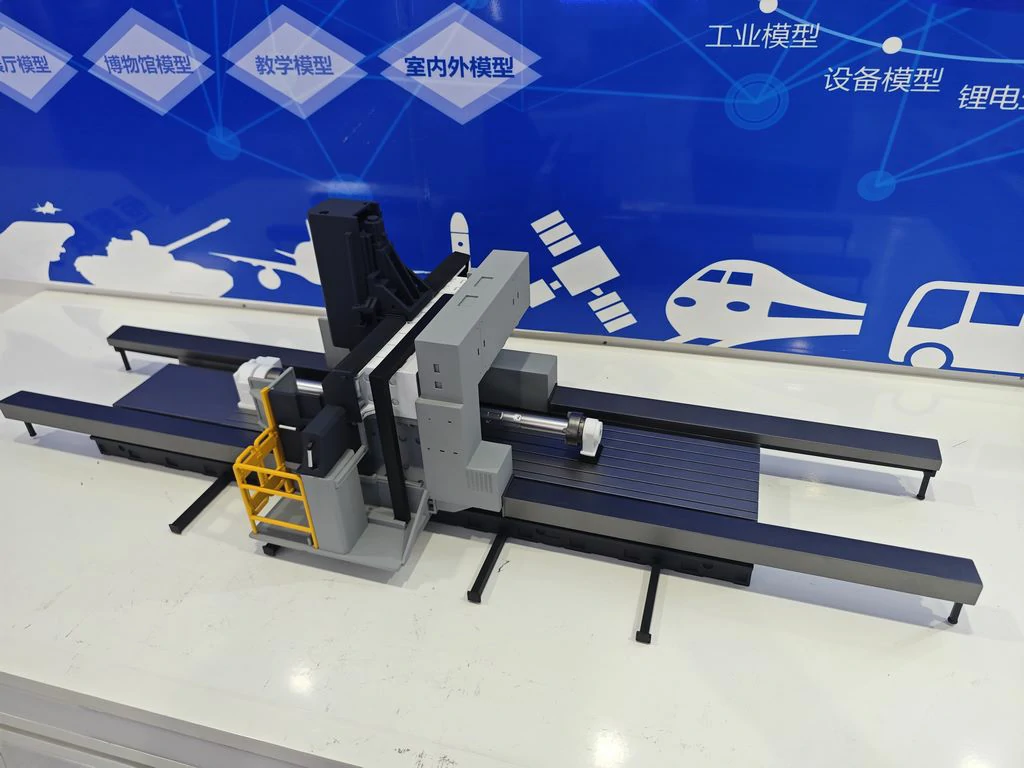
4. Finished Product Presentation: The 90% Scale Industrial Model
The completed scale model was placed on a display surface, showcasing a near-perfect resemblance to the original equipment:
* The main compartment exhibited a realistic metallic luster.
* The power components clearly displayed the equipment identification details.
* The bracket was accurately represented with the industrial model‘s characteristic simulated blue paint.
From blueprint to finished scale model, every stage demands precision – the accuracy of 3D printing model fabrication, the craftsmanship of manual assembly, and the attention to detail in coloring and aging. This meticulous process transforms technical drawings into tangible industrial model representations, preserving the equipment’s core identity while adding layers of authenticity. This is the art and craft of industrial model creation – using specialized materials and techniques to bring engineering visions to life as physical, realistic representations.