High-Fidelity Engineering Vessel Scale Model: Production Process & 3D Printing Techniques

This project showcases a detailed scale model of an engineering vessel, designed as a realistic replica of a large construction ship. The model accurately reproduces the ship’s structure, deck equipment, and operational functions, achieving an impressive reproduction rate exceeding 90%. Ideal for enterprise exhibition halls, trade shows, investment promotion, and technology popularization.
Materials Selection
The ship’s main body utilizes a composite material combining fiberglass and ABS sheet, balancing structural strength and curved surface modeling capabilities to ensure smooth ship line shapes and stable construction.
The deck employs simulated wood textured PVC panels, while the superstructure and cabins are crafted from ABS panels and 3D printed photosensitive resin. This combination effectively restores intricate details like doors, windows, and cabin interiors.
For operational equipment, core components such as cranes, pipelines, and chimneys are manufactured using 3D printed photosensitive resin and metal textured ABS, guaranteeing precise detail and authentic mechanical textures.
Auxiliary materials include specialized model adhesives, sandpaper, matte varnish, multi-color spray paint, and UV printed identification stickers, enhancing both the durability and visual appeal of the 3D printing model.
Production Process
Hull Shaping
The hull shell is formed integrally using fiberglass as a base through precise molding, followed by meticulous polishing and restoration of the curved contours and distinctive bow and stern waterline features. ABS sheets are carefully spliced to create the deck platform, with precise leveling and reservation of equipment installation positions.
Superstructure and Cabin Fabrication
ABS boards are cut and precisely spliced into multiple layers to form the superstructure, with detailed restoration of features like windows, railings, and stairs achieved through bonding and polishing techniques. The cabin’s internal structure is assembled using 3D printed components, enhancing the overall spatial hierarchy of the industrial model.
Assembly of Operational Equipment
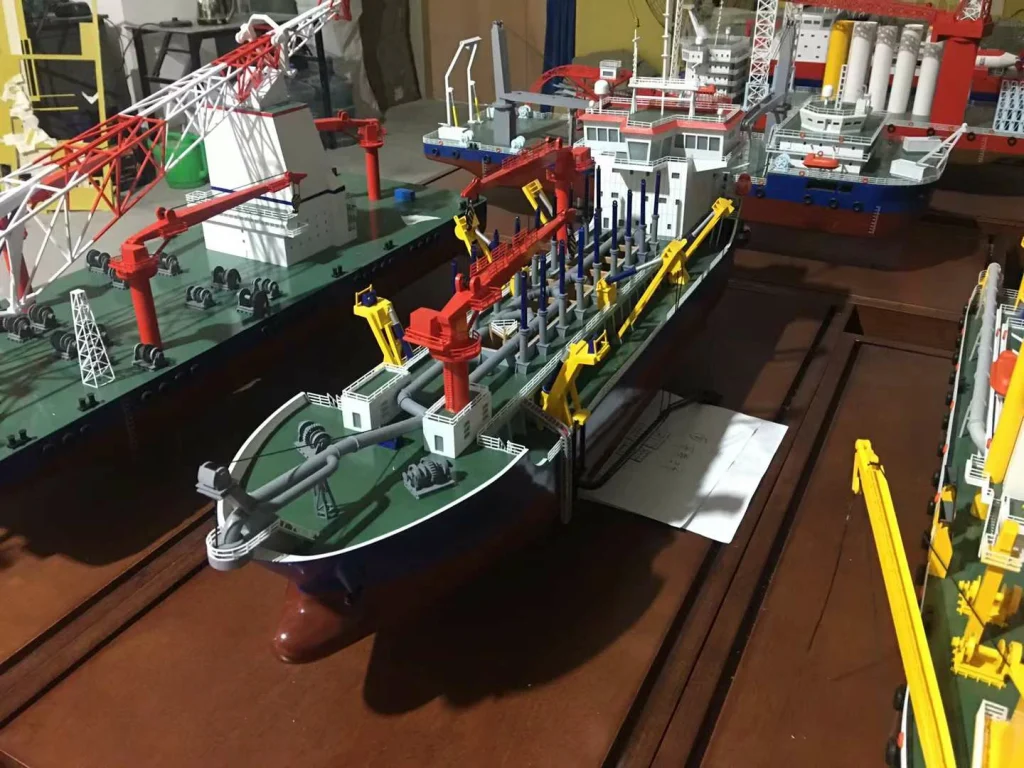
Operational equipment including cranes, pipelines, and chimneys is 3D printed with precision, then accurately bonded and fixed according to the deck layout. Crane arms feature movable structures to authentically replicate working postures, while pipeline and valve components are meticulously positioned and routed to simulate system directions.
Integral Assembly
The hull, superstructure, and deck equipment are carefully assembled, with precise adjustments to center of gravity and balance ensuring stable placement. Safety features like guardrails and escalators are added, completing the scene details for a comprehensive presentation.
Post-Processing and Color Treatment
Hull Coating
The ship’s bottom is expertly sprayed with reddish brown, while the hull above the waterline receives dark blue. Deck areas are treated with dark green, with strategic color separation enhancing the structural identification of this scale model.
Equipment and Detail Coloring
Cranes and railings are accented with eye-catching yellow spray, while chimneys feature black backgrounds with distinctive red and white rings to accurately replicate real equipment warning features. The superstructure maintains a white base with targeted light gray accents to enhance facade dimensionality.
Identification and Protection Treatment
The ship name and corporate logo are precisely positioned on the hull side using UV printing, ensuring clear visibility. A protective matte varnish application enhances durability while preserving material texture and avoiding over-bright paint finishes that could compromise the model’s industrial appearance.
Detail Optimization and Presentation Effects
The model undergoes thorough polishing and gap adjustment to perfect the splicing, correct equipment spacing, and finalize pipeline routing, ensuring perfect alignment with the real ship’s configuration. Surface cleaning creates a uniform, professional appearance, while structural stability testing guarantees component integrity.
The final product, through the synergistic application of advanced materials, specialized processes, and strategic color treatments, fully captures the operational functions and distinctive appearance characteristics of engineering vessels. This high-quality model demonstrates significant ornamental value alongside substantial educational merit, effectively meeting diverse requirements for enterprise display, technical exchange, and brand promotion across various industrial model applications.