Case Study: Ancient Architectural Model Making – From Traditional Craftsmanship to Modern Presentation
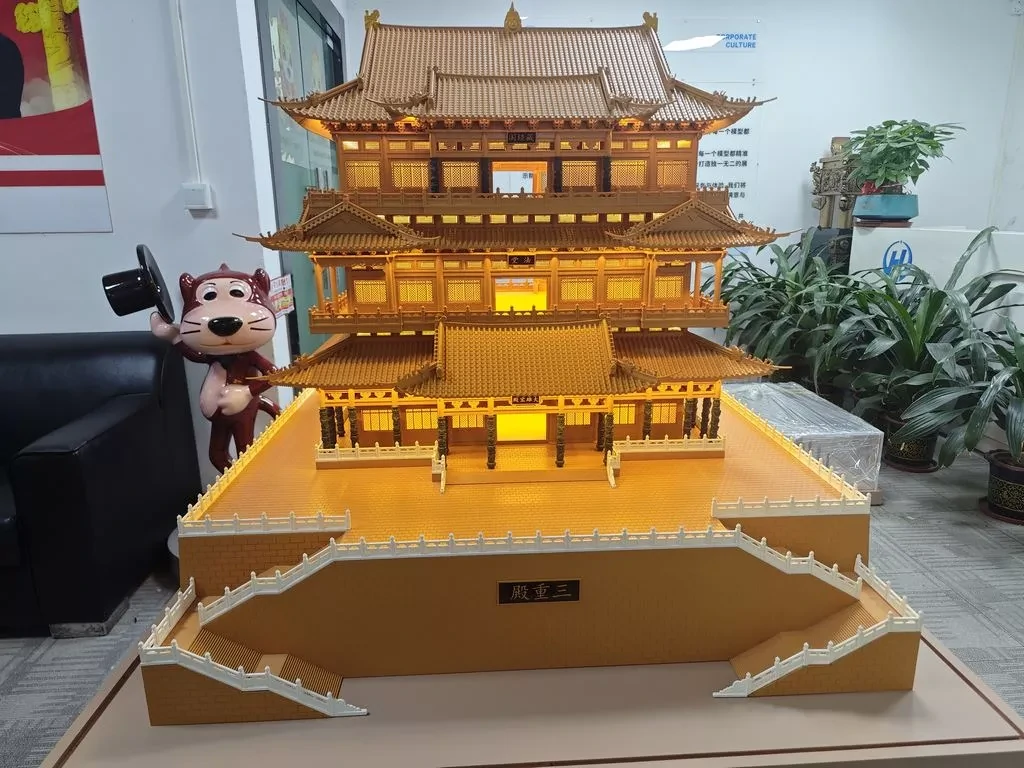
This case study explores the creation of a Chinese ancient architectural scale model, focusing on traditional wooden structures with a restoration rate exceeding 90%. The resulting sand table model masterfully combines time-honored techniques with contemporary presentation methods, serving as a bridge between cultural heritage and modern display needs. It exemplifies the fusion of tradition and technology in model making.
1. Project Background
This project centers on the production of a scale model representing a Chinese ancient building, using a traditional wooden prototype. The model achieves over 90% restoration fidelity. By integrating traditional craftsmanship with modern presentation techniques, it successfully preserves the wisdom of ancient architecture while adapting to current display requirements. This approach demonstrates a harmonious blend of cultural preservation and industrial model innovation.
2. Production Process: From “Making Small Samples” to “Mortise and Tenon Precision”
The production of ancient architectural models adheres to traditional construction principles, with the core process mirroring the logic of ancient building assembly:
-
Preliminary Preparation:
- Sketching: Initial proportional thumbnail drawings based on ancient architectural plans ensure clarity on structure, proportions, and details.
- Material Selection: Carefully chosen, corrosion-resistant woods (like pine and nanmu) are processed using techniques such as “pole laying out” and “cutting materials” to guarantee wood stability. (Model making)
- (Image:)
-
Structural Construction:
- Base Production: Utilizing wood or PVC foam board simulates the foundation, ensuring model stability.
- Column and Column Grid: Columns are crafted using traditional methods like “side foot” and “lifting,” forming the essential supporting framework.
- Beam Frame and Roof: Tenon and mortise connections are employed to join beams, replicating key components like the “arch of wooden architecture” and “cornice.” This restores both the architectural mechanics and aesthetic features.
-
Details and Decoration:
- Doors and Windows: Carved antique-style window panels are used, recreating traditional designs such as grid centers and grid fans.
- Carving: Decorative patterns (e.g., dragon and cloud motifs) are intricately carved onto wood components, or brick carvings are added to tiles, showcasing craftsmanship details.
- Decoration: Elements like railings and the “arch of wooden architecture” are incorporated to emphasize the architectural style.
3. Material Selection: Blending Tradition and Modernity
The materials used reflect a thoughtful integration of historical authenticity and practical modern needs:
-
Traditional Materials:
- Wood: Serves as the core substrate, maintaining the structural logic of ancient architecture that relies on wood as its framework.
- Bricks and Tiles: Antique bricks and tiles are employed to accurately replicate the texture of ancient building walls and roofs.
- Painting: Traditional pigments are used to simulate the ancient painting process, displaying authentic color layers. (Scale model painting)
-
Modern Materials:
- PVC Foam Board: Used for abutments and select components to reduce weight and enhance stability.
- Acrylic: Allows for transparent doors and windows, improving visual clarity.
- (Industrial model) LED Strip: Embedded within the model to simulate night lighting effects, significantly enhancing the visual presentation and atmosphere.
4. Post-Processing and Coloring: Achieving Restoration Fidelity
Attention to detail is paramount for achieving a high degree of restoration:
-
Surface Treatment:
- Soil Filling and Polishing: Gaps between components are filled, and the surface is meticulously polished until smooth, eliminating visible joint marks.
- Primer Spraying: Matte primer is applied to improve adhesion and prepare the surface for coloring.
-
Color Expression:
- Layered Spraying: Base colors (e.g., dark brown, vermilion) are applied first, followed by shadow and highlight layers to create a three-dimensional effect.
- Dry Sweeping Technique: Applied to wooden components to simulate aged wood texture and patina.
- Transparent UV Varnish: Provides a protective, durable, and glossy finish over the colored surface.
Lighting and Display Enhancement
- Internal Lighting: LED strips are embedded, simulating the night lighting of ancient structures and adding depth. (Architectural model lighting)
- External Lighting: Strategically placed lighting highlights the building’s contours and intricate details, ensuring the model is visually impactful from all angles.
This case study demonstrates a successful approach to creating high-fidelity scale models of ancient architecture, combining deep respect for traditional techniques with modern enhancements for display.