Precision Crafted Architectural Models: From Design to Delivery
The production of scale models of ancient architecture requires meticulous planning, precision craftsmanship, and respect for cultural heritage. Our factory production process ensures high quality and consistency, creating detailed representations of historical structures. Below is a breakdown of our production logic, focusing on key stages:
1. Design and Development: Cultural Accuracy and Technical Planning
- Architectural Design: Utilizing Computer-Aided Design (CAD) or traditional drawing methods, we create detailed elevation drawings, section views, and component breakdowns. Dimensions (like roof slope 1:2.5 or the arch of a wooden structure at 1:3 scale) and material specifications (solid wood, paper, acrylic) are clearly marked. Traditional color schemes (vermilion, gilding, black tiles) are considered, and a detailed process flow sheet is developed to guide production.
- Image:
2. Material and Tool Preparation
We source high-quality materials essential for durability and authenticity:
* Materials: Solid wood (camphor wood, nanmu), thick cardboard, acrylic sheets, hot melt adhesive, woodworking adhesives, specialized pigments (Chinese painting/acrylic), gold leaf/gold foil paper.
* Tools: Essential tools include woodworking saws, files, sandpaper, carving knives, rulers, compasses, drills, hot melt glue guns, and various brushes.
3. Core Process: Layered Assembly and Detail Carving
Our meticulous assembly process involves:
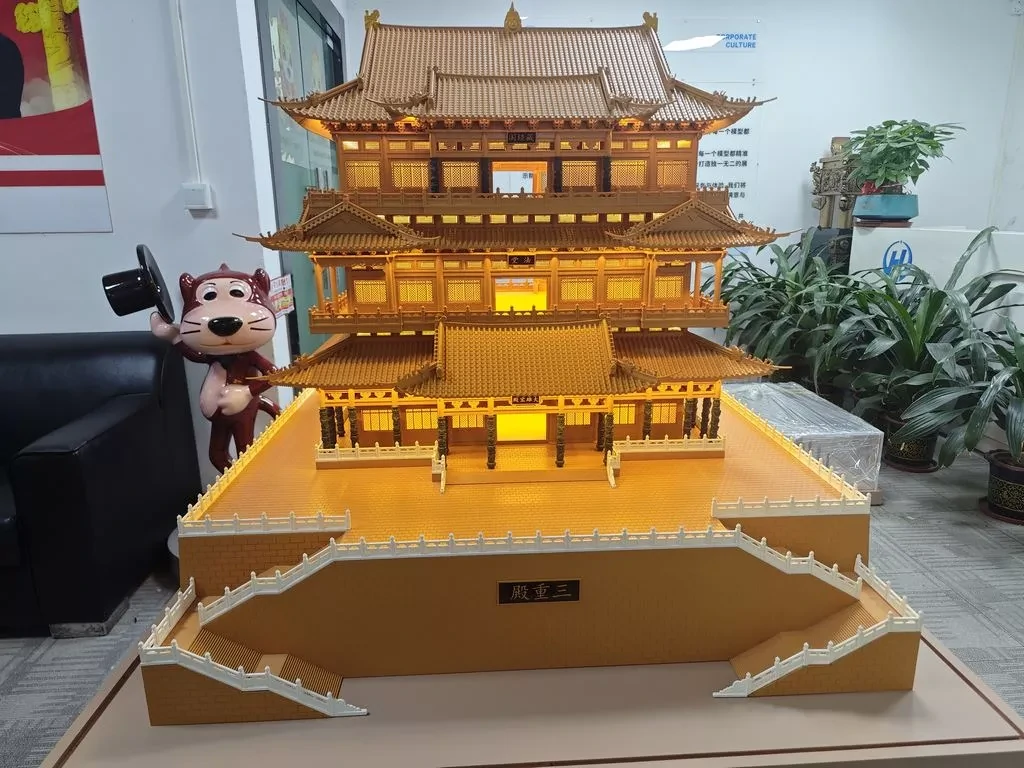
1. Base and Pedestal: Constructing a stable multi-layer base (often inspired by traditional “Dian Zhong San” designs). Each layer is cut into a “trapezoidal+stepped” shape, smoothed, and bonded for overall stability.
2. Roof and Eave Systems: Creating double-eave structures by bonding multiple layers of solid wood/cardboard with hot melt adhesive. Edges are meticulously shaped into “flying eaves and upturned corners” to replicate ancient architectural agility. Roof tiles are recreated using cut cardboard pieces or carved acrylic textures.
3. Wooden Arch Structure & Beam Framework: Disassembling traditional wooden arches (“Dou, Gong, Ang”) into smaller components for carving (using solid wood/cardboard), bonding after polishing to simulate both structural support and decorative elements. Building the “column, beam, beam” framework with precision-cut solid wood bars, ensuring accurate connections with the arch and roof structure for stability.
4. Doors, Windows, and Railings: Designing and cutting cardboard/acrylic components. Carving intricate textures like “grid windows” or “grid doors” for walls. Crafting railings (“watch posts, look for sticks, floor tie-beams”) from solid wood or cardboard strips and attaching them to enhance the model’s sense of hierarchy and detail.
4. Painting and Decoration: Bringing History to Life
This stage adds the final cultural and aesthetic elements:
1. Base Color Application: Using wood glue and pigments, we evenly apply base colors to the structure (beams, arches, etc.), allowing drying and polishing to achieve a characteristic “vermilion base.”
2. Ornamental Painting: Applying traditional decorative elements such as “cloud patterns, loop patterns, and entwined lotus flowers” using specialized brushes. Applying gold leaf or foil enhances the model’s sense of luxury and solemnity.
3. Detail Embellishments: Adding small, intricate decorative pieces like simulated “glazed tiles” or “bronze bells” at key locations (cornices, arches) to evoke the artistic conception of “wind and rain bell ringing” found in ancient architecture.
5. Quality Control: Ensuring Excellence
Stringent quality checks are integrated throughout:
1. Process Standards: Strict process standards are established (e.g., “wooden arch joint misalignment ≤ 1mm,” “cornice camber ± 5°”). Quality control personnel conduct step-by-step inspections.
2. Finished Product Testing: Models undergo simulated handling tests (vibration, impact) to ensure structural integrity, stability, and that all components remain securely attached.
6. Packaging and Transportation: Protecting Cultural Value
Specialized packaging protects the finished model:
1. Packaging Design: Models are carefully packaged in custom-designed boxes (wood, acrylic, or cardboard) lined with velvet. Labels include the “ancient building name, scale, and process description” to enhance the model’s value as a sand table model or scale model gift.
- scale model
- sand table model
- industrial model
- 3D printing model (mentioned conceptually in the design development stage)
- precision craftsmanship